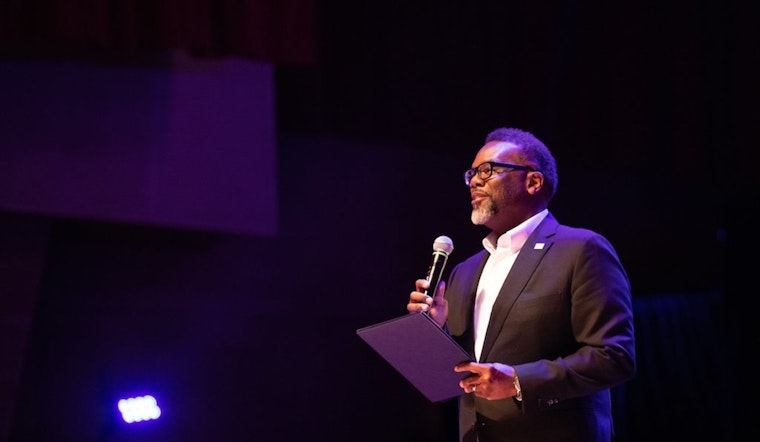
As the budget shortfall for Chicago approaches $538 million for 2024, with nearly $200 million tied to the ongoing migrant crisis, tensions are rising within the city's leadership and citizens as the city aims to address the humanitarian needs of thousands of asylum-seekers while simultaneously managing its own ballooning financial troubles according to a report by Hoodline. Amid these challenges, Mayor Brandon Johnson now faces the difficult task of walking the tightrope between aiding asylum-seekers and addressing the city's own struggling communities.
Yesterday, the Chicago City Council approved additional spending of $34.5 million on the city's worsening migrant crisis, which has been straining the city's resources and exacerbating tensions between the competing social service priorities according to Fox 32 Chicago. As the city scrambles to house, food, and provide care for thousands of migrants, debates are intensifying over how to fairly balance aid provision between the growing migrant population and Chicago's longstanding residents, who are increasingly feeling overlooked.
Chicago's financial challenges are further complicated by the rapidly increasing costs of the migrant crisis, with Mayor Johnson's plan to move over 2,000 asylum-seekers from Chicago police stations and airports into large tent cities projected to add approximately $5 million every month to the existing migrant crisis costs as reported by Hoodline. This conundrum comes at a time when the city is also grappling with large, unresolved pension costs and costly, new five-year contracts
While some local leaders, like Ald. Walter Burnett of the 27th Ward, are calling for an equitable approach that addresses both the irregular migration crisis and homelessness among citizens, others, such as Ald. Raymond Lopez of the 15th Ward, stress the importance of "charity starting at home" and focusing efforts and resources on long-neglected local communities as stated on Fox 32 Chicago.
The Council recently approved a $33 million federal grant from the U.S. Department of Homeland Security, aimed at alleviating some of the costs tied to the migrant crisis. However, this decision provides only a temporary solution for a few months of past and future spending, with the overall costs predicted to exceed $300 million by the end of the next year.
For Mayor Johnson, the task of managing the city's growing financial troubles is nothing short of monumental. The administration must now decide on how best to allocate nearly $2 billion in federal aid provided to the city in light of recovering from the COVID-19 pandemic faster than anticipated, while simultaneously making hard decisions on balancing the needs of the myriad communities who call Chicago their home per Hoodline.