

























































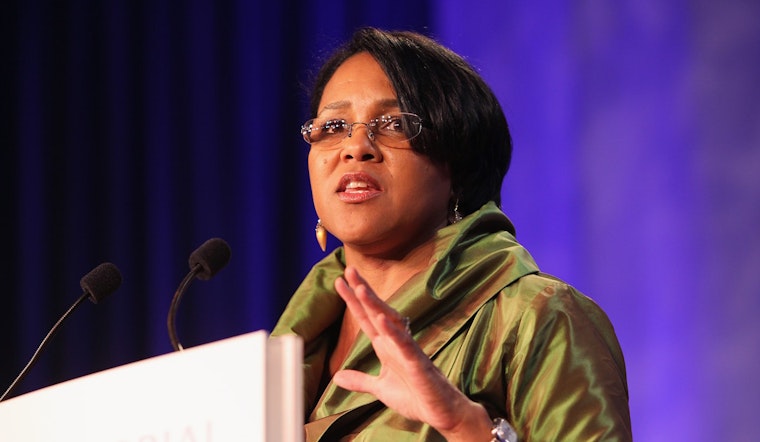
The unexpected departure of Walgreens Boots Alliance CEO Rosalind Brewer has brought the underrepresentation of black women in C-suite positions back into focus. A former Starbucks and Sam's Club executive, Brewer, 61, was the sole black female CEO of any S&P 500 company. Her successor will see that position filled by interim CEO Ginger Graham, another woman but none of African American descent. According to Chicago Sun Times, this situation highlights the slow progress for diversity among the nation's largest corporations.
Before Brewer's appointment in March 2021, Ursula Burns, who left Xerox in 2016, was the last black woman to lead an S&P 500 company. Despite the passage of time, representation has not markedly improved. White men dominate the ranks of named executive officers, encompassing top-paid roles such as CEOs and chief financial officers. In 2022, white men accounted for 7 in 10 named executive officers across these corporations, while only 90 women made up 17% of these positions, according to USA Today analysis. When it comes to black women, they comprise a mere 1% of top leaders and are even more sparsely represented at CEO level.
Another disappointing statistic is that, in 2023, the percentage of newly appointed black directors in S&P 500 companies has dropped to 15%, down from 26% in 2022, according to a report by Bloomberg. This seems to be heading back towards the 11% recorded in 2018.
Although companies face increased public pressure and scrutiny over their diversity efforts, the recent US Supreme Court ruling on the use of race in college admissions may pose challenges to these initiatives. Combined with the long time it takes for an executive to reach the top position and slow improvement in corporate diversity, this might suggest a prolonged wait before a black woman could become CEO of an S&P 500 firm once again. A Bloomberg article quoted Lizandra Vega, managing director at Gaia Human Capital Consultants, predicting that it could be five years or longer before the S&P 500 sees another black female CEO.
Regarding Brewer's resignation, she will be remembered for her efforts to drive Walgreens's transformation into a health care services provider. However, during her tenure, the stock lost half of its value amid numerous hurdles in transitioning from the pharmacy and retail business.
Although Brewer's position will be filled by another woman, the lack of black women holding CEO positions in S&P 500 companies remains a glaring problem. As summarized by Chris Martin, a research economist for workplace equity platform Syndio, in the Bloomberg article, progress for black women in high-profile roles is slow and often seems to take a "one step forward, one step back" approach. Martin points out the "frustrating" pace at which these opportunity gaps are closing.





