

























































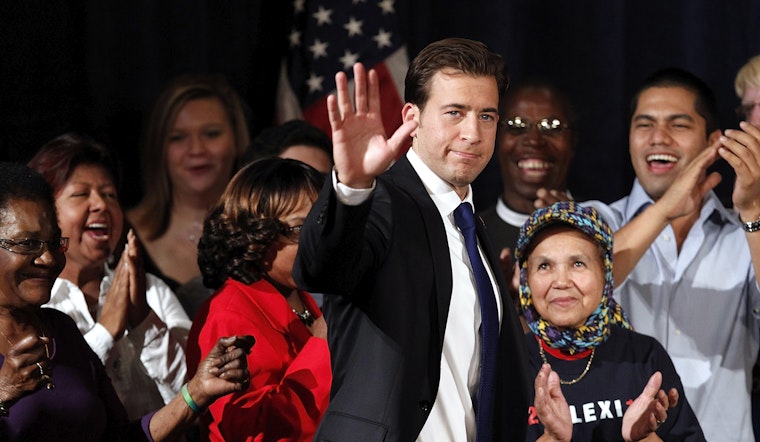
In recent times, the United States has come to witness a surge in the number of book bans, predominantly in Republican-led states, where certain texts deemed offensive have been restricted at schools and libraries. Amid this developing landscape, Illinois has emerged as a beacon of resistance in defense of freedom of speech. According to CBS News, Illinois Secretary of State Alexi Giannoulias testified before the U.S. Senate Judiciary Committee on September 12th, promoting a new law meant to actively prevent book bans by withholding funding from libraries that engage in such practices.
The Illinois law, passed earlier this year, prohibits state funding to any library that removes books for "partisan or doctrinal" reasons, as reported by CBS News. Giannoulias stated before the committee that this legislation is vital, as it represents the spirit of the country and its founding principles. "This legislation is important, because both the concept and the practice of banning books contradicts the very essence of what our country stand for, and what our democracy was founded on," Giannoulias said, emphasizing the need to protect freedom of expression.
Such a ban seems timely, as the American Library Association reported 67 attempts to quickly ban books in Illinois in 2022 alone. In an effort to ensure state funding, the Illinois Library System Act mandates that libraries adhere to the association's Library Bill of Rights which find that books "should not be proscribed or removed because of partisan or doctrinal disapproval." With the new legislation set to take effect on January 1, 2024, Illinois takes a strong stand against censorship.
Moreover, to engage the public in dialogue on the issue, Giannoulias has also launched a website, bookbans.com, which encourages people to share their stories and learn how to protect freedom of speech according to CBS News.
The Center Square reported that the testimony included information about Illinois' measure which threatens to withhold tax dollars from public libraries that limit the types of available books. The hearing set the stage for an ongoing discourse about censorship, state funding, and the role that libraries play in preserving the free exchange of ideas.





