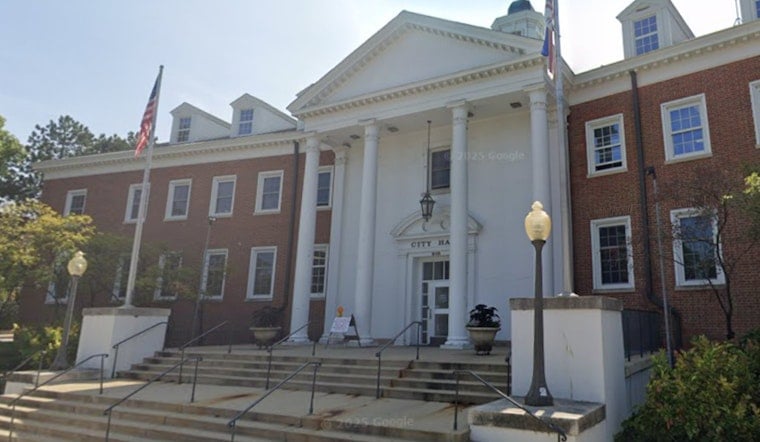
Park Ridge is on the verge of creating its first-ever historic district, nearly a decade and a half after the city gained the legal power to do so. The Committee of the Whole voted Monday to designate up to five homes along Talcott Place and Crescent Avenue as the Spanish Town Historic District, a milestone for a city that has held the authority to create such districts for 15 years but never used it.
The vote wasn't unanimous. According to the Chicago Tribune, council member John Moran cast the lone no vote on the Spanish Town designation, warning that families could eventually be forced out of Park Ridge by the restrictions that come with historic status. Moran said families could be pushed out because they underestimated the significance of those restrictions, and he separately voiced opposition to potentially limiting future homeowners.
The five homes under consideration date to 1927, part of a subdivision developed by William Durchslag, who was inspired by a trip to Cuba and hired local architect Benedict Bruns to design the neighborhood, per the Tribune's reporting. Before taking on Spanish Town, Bruns had built a reputation as a prominent bungalow baron responsible for scores of Chicago homes in neighborhoods like Rogers Park, North Mayfair, and West Ridge that are now listed in National Register historic districts, according to Spanish Town PR. Bruns designed the enclave's distinctive stucco-faced, tile-topped homes, the Tribune reported.
An Ambitious Plan Cut Short by the Depression
Durchslag's original vision for Spanish Town was far grander than what stands today. His 1920s master plan called for 63 Spanish Colonial Revival homes, 17 apartments, and commercial space, but the Great Depression halted construction after only 12 homes were built, according to an ArcGIS StoryMaps history of the neighborhood. That scarcity is central to why preservationists consider the surviving homes worth protecting.
The formal municipal application, designated HD-26-01, covers five specific properties: 424, 428, and 430 Talcott Place, and 1305 and 1309 South Crescent Avenue, according to the Journal & Topics. One of those homes, 424 Talcott Place, already carries individual Park Ridge Historic Landmark status, designated in September 2011. Concerns about preserving the block sharpened after one of the original 12 homes, at 420 Talcott Place, was demolished in 2016, the Journal & Topics reported.
A Near-Teardown Sparked the Push
The immediate catalyst for the application traces back to local resident Emily MacArthur, who filed for historic district status this year after neighbors feared 1309 South Crescent Avenue had been sold to be demolished. That fear led a prospective buyer to pull out of the deal shortly before a planned July 1 closing, per the same Journal & Topics report.
At Monday's meeting, council member Drew Awsumb framed the decision as one without an easy answer, saying there is no right or wrong answer about creating the district, according to the Tribune. He noted that city leaders must decide whether to move forward, while also pointing to potential upside: Awsumb said historic districts typically see more financial investment and can become major tourist draws, citing New Orleans as an example of a city where historic districts have become major attractions.
Homeowner sentiment appeared largely favorable but not unanimous. Four of the five homeowners supported the proposed district, the Tribune reported, while a fifth had no objection to it. Awsumb said all five homeowners were not opposed to creating the district. Council member Lauren Rapisand said she would support the district only if every homeowner backed it, and colleague Fred Sanchez wanted clear, unanimous homeowner consent before final approval, adding that he would oppose the district if he heard objections from any homeowner before the next vote. Sanchez also noted the designation could be narrowed to four houses if an objection arose before that vote.
Tax Perks Weighed Against Design Oversight
Part of the appeal for homeowners lies in state financial incentives. Under Illinois's Historic Residence Property Tax Assessment Freeze Law, owner-occupants who invest at least 25% of their home's market value into certified rehabilitations receive an eight-year freeze on assessed property values, followed by a four-year step-up period, according to the Illinois Historic Preservation Division. Historic district inclusion also opens the door to restoration and maintenance grants and certain federal and state tax advantages, per the Tribune.
But those benefits come with strings attached. Major remodeling of designated homes would require approval from the Park Ridge Historic Commission, and if the district is formally established, owners must obtain a Certificate of Appropriateness before executing major exterior modifications that require city permits, according to Park Ridge Wire. That design-review requirement is precisely what worried Moran and fed broader city leaders' fears that historic designation might limit future property development.
Park Ridge City Attorney Adam Simon sought to ease some of those concerns, pointing out that homeowners can leave the district under opt-out clauses, the Tribune reported. Even so, the council asked to revisit the historic district policy again in the future, suggesting Monday's committee vote won't be the last word on how Park Ridge balances preservation against property owners' flexibility.
Part of a Broader Pattern at City Hall
The Spanish Town debate lands amid a string of Park Ridge disputes over aesthetic control on private and public property. Just two weeks earlier, the City Council voted 4-2 to pass a new public mural ordinance after extended debate over aesthetic guardrails and visual controls, as Hoodline previously reported. Taken together, the two fights suggest Park Ridge leaders are increasingly being asked to referee where community aesthetics end and individual property rights begin, whether the canvas is a mural or a 1927 stucco bungalow.
Park Ridge has maintained a historic preservation ordinance and 18 individual local landmarks for years, but has never designated a full historic district until now, according to Park Ridge Wire. The city earned formal preservation authority in July 2012, when it was designated Illinois's 75th Certified Local Government by the Illinois Historic Preservation Agency and National Park Service, per the Journal & Topics. Whether Spanish Town becomes the city's first official district now depends on the final council vote and whether the holdout concerns raised by Sanchez and Moran can be resolved beforehand.