

























































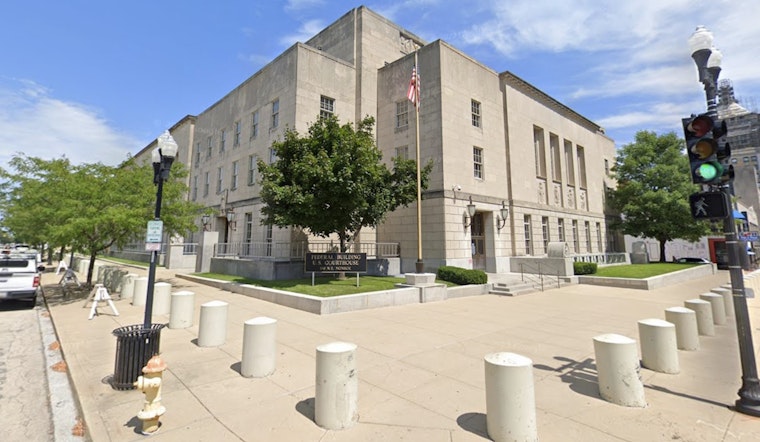
On September 6, Dazmine M. Erving, a resident of Peoria, Illinois, faced the consequences of his actions when he was sentenced to 65 months in federal prison for possessing a firearm as a felon—a crime that continues to stir unrest in communities across the nation. This development is a stark reminder of the ongoing struggle with criminal recidivism and the challenges faced by law enforcement in ensuring public safety.
According to the U.S. Department of Justice, the case began on September 14, 2022, when a police officer from Peoria approached an SUV parked at River Front Park after its closure. Inside, the officer found 32-year-old Erving and a juvenile female, who was later found to have an outstanding arrest warrant. The officer smelled burnt cannabis in the vehicle, resulting in further investigation.
Diving deeper into the unfolding situation, a records check revealed that Erving was on federal supervised release following a previous conviction for possessing a firearm as a felon. After Erving and the juvenile female exited the SUV, the officer located a loaded semiautomatic pistol on the floorboard where Erving sat. The firearm had been reported stolen and contained a round in the chamber with eight rounds in the magazine.
Erving was indicted later in September 2022 and entered a guilty plea in May of 2023. He faced additional charges as his possession of the pistol violated the terms of his supervised release, to which he also pleaded guilty. U.S. District Judge James E. Shadid imposed a term of 41 months' imprisonment for Erving's new gun case, to run consecutively to a term of 24 months' imprisonment for violating the terms of his supervised release, bringing the total sentence to 65 months.
Such cases highlight the importance of monitoring and rehabilitation for those who have faced prior convictions. Persistent criminal behavior, particularly involving firearms, poses a significant threat to society and the safety of our communities. This case demonstrates the ongoing efforts of law enforcement and the justice system to mitigate these threats and hold those who endanger public safety accountable.
Erving's case is part of Project Safe Neighborhoods (PSN), a program designed to reduce violent crime and gun violence by bringing together all levels of law enforcement and the communities they serve. On May 26, 2021, PSN announced a new violent crime reduction strategy, which includes fostering trust in communities, supporting community-based organizations in violence prevention efforts, setting focused and strategic enforcement priorities, and measuring results.





