

























































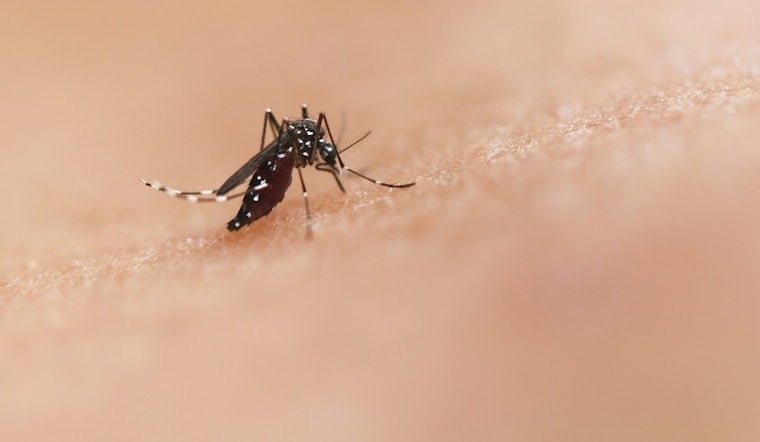
Trucks carrying licensed mosquito abatement technicians will roll through Beverly, Morgan Park and Washington Heights starting Thursday at dusk, dispensing a low-volume insecticide spray after city health officials detected a rise in mosquitoes carrying West Nile virus. The spraying will continue through the night until around 1 a.m. Friday, covering an area that runs from Halsted Avenue to Western Avenue and from 99th Street to 111th Street.
The Chicago Department of Public Health will use DeltaGard, an insecticide approved by the U.S. Environmental Protection Agency, for the operation, according to Block Club Chicago. As of August 6, the city had tested 1,093 groups of collected mosquitoes this season, and 165 of those groups came back positive for West Nile virus. Rain is forecast for Thursday night into Friday, and the spraying schedule depends on weather conditions.
A Second Round of Spraying for the Far South Side
This isn't the city's first adulticide run of the summer. The health department sprayed insecticide near O'Hare Airport in late July, then treated Pullman and South Deering on July 30, according to the City of Chicago. The department returned to spray Pullman and South Deering again on August 12, using Permanone, a permethrin-based adulticide, for those earlier rounds before switching to DeltaGard for the mid-August South Side operations.
Ald. Matt O'Shea announced the upcoming spraying in an email to residents, saying the spray is not harmful to people or pets. The city's West Nile virus tracker currently classifies Chicago at high risk, and the city was ranked the second worst city for mosquito activity across the country back in May, per the same Block Club Chicago report.
Why Health Officials Are Watching This Closely
Chicago collects mosquitoes from traps throughout the city roughly from June through October, testing the collected batches weekly for West Nile virus. Every spring since May, the health department has also applied EPA-approved larvicide to more than 80,000 street catch basins across the city, targeting the standing water where mosquito larvae mature before they can fly, according to the City of Chicago. Truck-mounted spraying like Thursday's operation is a secondary measure deployed once trap data shows adult mosquito populations are carrying the virus at elevated rates.
Dr. Janna Kerins said preventing mosquito bites remains the best way to protect people and their families against West Nile virus, and added that spraying adult mosquitoes is an important part of protecting Chicagoans against the disease, per Block Club Chicago's report. No human cases of West Nile virus have been reported in Chicago so far this year, according to the city's dashboard, though the city logged 34 human cases last year.
Statewide Numbers Show Why 2025 Was a Turning Point
Illinois saw a sharp jump in West Nile activity last year, recording 150 confirmed human cases and 10 deaths statewide, compared with 69 cases and 13 deaths in 2024, according to the Cook County Department of Public Health. Chicago's first human cases in 2025 weren't confirmed until mid-August, after patients on the South and Northwest sides developed symptoms in late July and early August, as reported by Outbreak News Today. That timing lines up with when mosquito infection rates typically peak in Chicago and transmission risk to humans emerges.
Federal surveillance data offer some reassurance for residents in the spray zone. About 80% of people infected with West Nile virus never develop symptoms, roughly 20% experience mild flu-like illness, and fewer than 1% suffer severe neuroinvasive disease such as encephalitis or meningitis, according to the CDC. Chicago's mosquito surveillance program traces back to the city's worst outbreak on record, in 2002, when 225 human cases and 22 deaths were reported, according to Data-Smart City Solutions.
What Residents Should Do During Spraying
City officials recommend residents stay indoors and close their windows while the trucks pass through Beverly, Morgan Park and Washington Heights. Pet owners are advised to keep animals along with their food and water bowls indoors during the spraying window, and residents should bring children's or pets' toys inside as well.
The Far South Side operation follows similar spraying responses elsewhere in the Chicago area this summer. Hoodline previously reported the season's first infected mosquitoes in the city back in June, and suburban communities including St. Charles, Kendall County and the Brookfield area have all carried out their own truck-mounted fogging after positive trap results this season.





