

























































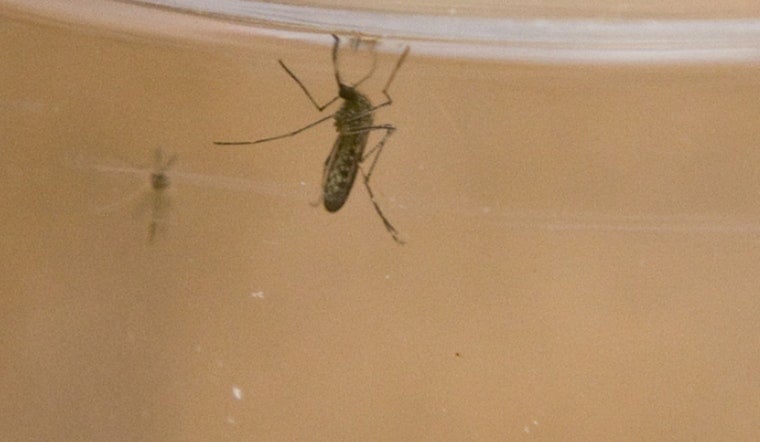
St. Charles is rolling out a truck-mounted mosquito spray on Tuesday evening after local traps picked up West Nile virus, with officials aiming to knock down adult mosquitoes that can spread the illness around homes and neighborhood parks.
Positive Mosquito Tests Spur Citywide Response
The move follows reports that mosquito samples collected in the Kane County area tested positive for West Nile, prompting city leaders to schedule a synthetic, citywide application with their contractor, Clarke. As reported by the Kane County Chronicle, the treatment is set for Tuesday evening, weather permitting.
What The City Says About Safety
The City of St. Charles says Clarke uses an EPA-registered synthetic treatment described as safe for humans and pets, with sprays applied at dusk to limit contact with pollinators. According to the city, the mist usually dissipates within about 5 to 30 minutes, and the truck-mounted application, delivered in very small droplets, is not expected to affect aquatic life such as the Fox River ecosystem. The city advises anyone with respiratory conditions to stay indoors and close windows during the application. The City of St. Charles details those points on its mosquito program page.
How Much Risk Are We Talking About?
State health figures help explain the caution. The Illinois Department of Public Health reports there were 150 human West Nile cases and 10 fatalities in Illinois in 2025 and urges residents to cut down mosquito breeding sites and reduce bites. The Illinois Department of Public Health recommends the three "R's": reduce, repel and report, to keep risk in check.
Nationally, the Centers for Disease Control notes that about 80% of people infected with West Nile virus have no symptoms, roughly 20% develop a mild, flu-like illness, and less than 1% experience severe neuroinvasive disease such as meningitis or encephalitis. The CDC explains the usual symptoms and which groups face higher odds of severe illness.
What Residents Are Urged To Do
Officials are sticking with simple, proven advice: use an EPA-registered insect repellent, wear long sleeves and pants when mosquitoes are active, and avoid spending time outdoors at dawn and dusk when the bugs are most persistent. Residents who want advance notice of treatments or who need to report standing water can sign up through Clarke's Customer Portal or use the portal's resident hotline to submit reports. The Clarke site also lists tools for reporting nuisance activity and registering for pre-treatment notifications.
How The Spray Will Be Applied
The adulticide is typically applied with ultra-low-volume (ULV) truck sprayers after dusk so that fine droplets can drift into backyard areas. The city states that applications are timed to minimize impacts on bees and butterflies. Larvicide treatments are also used where standing water is found to cut down on future mosquito broods, and the city coordinates trapping and testing with Clarke to guide its response. For residents who want the technical breakdown on products and methods, the City of St. Charles mosquito-control resources spell out the approach in more detail.
Where To Find Updates
For treatment notifications or to flag problem areas, residents can use Clarke's Customer Portal or the company's resident hotline, with the portal posting service details and past treatment reports. Clarke and the city website will carry the latest scheduling updates if weather or other issues force any changes.





