

























































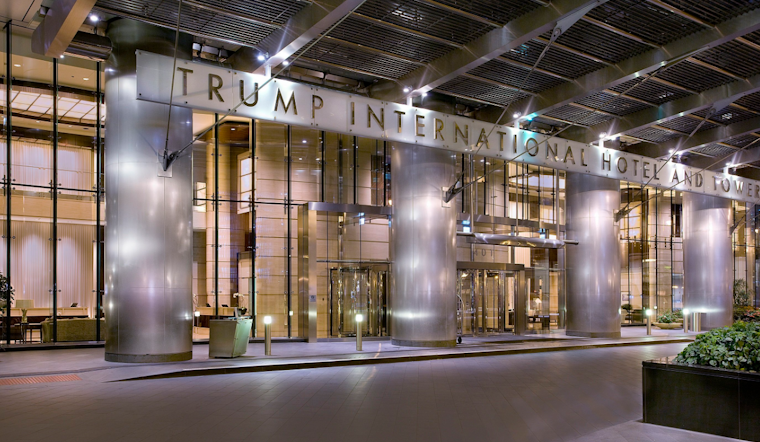
Attorney General Kwame Raoul has recently filed an amended lawsuit against Trump International Hotel & Tower, known as Trump Tower, in Chicago for its repeated failure to accurately abide by environmental laws and subsequently protect the Chicago River, according to the Illinois Attorney General.
The amended complaint, lodged yesterday, September 28, alleges that Trump Tower is continuing to break environmental laws by significantly underreporting the daily volume of water it discharges into the Chicago River, violating both environmental regulations and the conditions of its National Pollutant Discharge Elimination System (NPDES) permit.
In 2018, the Illinois Attorney General's office originally filed a lawsuit against Trump Tower, alleging violations of both the Illinois Environmental Protection Act and Illinois Pollution Control Board regulations. The suit claimed that the building failed to obtain the necessary permit and submit monthly information to the Illinois Environmental Protection Agency (IEPA), as required by the Clean Water Act, to demonstrate compliance with federal regulations relating to its cooling water intake system operation, as per the Illinois Attorney General.
The updated lawsuit emerged after an expert witness for the Sierra Club and Friends of the Chicago River examined raw data provided by Trump Tower during the discovery process, comparing it to the DMR data the building reported to the IEPA. The comparison revealed a "significant discrepancy" between the flow data recorded by the building's automated system and the DMR data reported, prompting the Attorney General's office and the environmental organizations to aggressively pursue amended lawsuits.
Trump Tower, situated along the banks of the Chicago River, operates a cooling water intake system capable of drawing more than 20 million gallons of water daily from the river to regulate the building's heating, ventilation and air conditioning system. The substantial quantities of water intake necessitate federal law enforcement to conduct extensive studies of Chicago River fish populations and the impact of the building's water intake processes. To protect against potential damage to the river's aquatic life, the federal Clean Water Act regulates cooling water intake structures, given their ability to inadvertently pull large volumes of fish into a building's cooling system, according to the Illinois Attorney General.
Trump Tower's complicated legal history extends beyond the most recent amended lawsuit. In 2012, the Illinois Attorney General's office filed a complaint against Trump Tower with the Illinois Pollution Control Board, alleging that the building was discharging heated water into the Chicago River without an NPDES permit. Subsequently, the issue was resolved, and Trump Tower was ordered to obtain an NPDES permit, pay a fine, and effectively comply with environmental laws. However, the building sought a modified NPDES permit the following year, after initially misreporting the amount of water it withdrew and discharged into the Chicago River daily.





