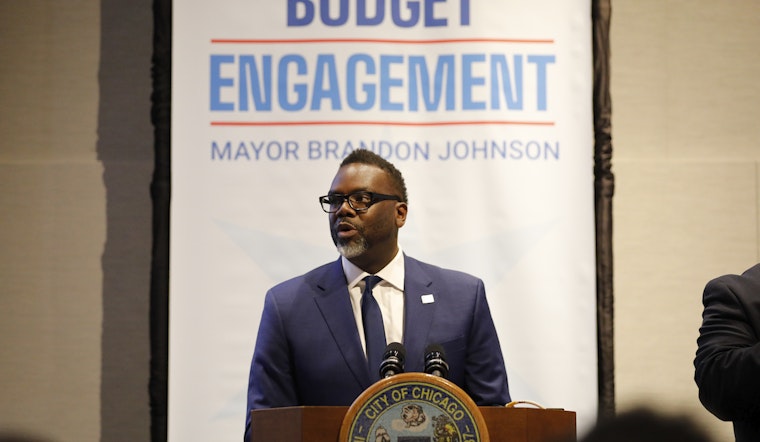
Chicago Mayor Brandon Johnson unveiled his maiden budget for FY2024, named "The People's Budget," on October 11, 2023. This bold proposal aims to bridge economic and community disparities while proving financially sound. It seeks to cultivate economic prosperity, safeguard the environment, and foster a sense of security among all Chicago residents.
I’m proud to present a budget recommendation that invests in communities and people, so that every resident has the resources and amenities they need to thrive. https://t.co/ScebOxRhNg
— Mayor Brandon Johnson (@ChicagosMayor) October 11, 2023
Heralding a balanced budget of $16.6 billion, Mayor Johnson's administration has precluded a heavy dependence on one-time revenues and staved off property tax hikes. This progressive budget outlines measures to reduce the City's structural deficit and emphasizes revenue proposals grounded in sensible financial practices. It also accounts for pensions and addresses debt obligations, ensuring Chicago's continued allure for families, workers, students and businesses.
According to the official release, the budget encapsulates Chicago’s unique challenges and possibilities. It underscores necessary investments in community security, health, environmental services, housing and infrastructure, economic growth, and inclusive human services. Mayor Johnson underscored the four pivotal elements throughout the budget's formulation process: co-governance, competency, compassion, and collaboration.
The People's Budget, profoundly representing feedback from residents, outlines a myriad of judicious investments. These include new approaches to community safety, strengthening mental health services, prioritizing housing assistance programs, developing additional support for Chicago's workforce, enhancing operational services, and propelling youth employment opportunities.
Mayor Johnson's budget includes allocating over $76 million towards youth jobs, including expanding summer and year-round employment programs. The plan earmarks more than $15 million annually for mental health safety initiatives, proposes expanding the Chicago Department of Public Health mental health staff by 75%, and invests an unprecedented $250 million in homelessness support, enhancing the city's shelter network.
The plan resurrects the Department of Environment to oversee the city's various environmental and sustainability initiatives. It aims to tackle housing needs through an additional $10 million investment in the Department of Housing's Home Repair Program for low-income homeowners, which will lead to significant improvements in their living conditions.
The budget establishes the first-ever Office of Community Safety within the Mayor's Office as part of its community safety initiatives. This protocol includes a $100 million investment in anti-violence programs, restorative justice efforts, re-entry work, and preventive measures against domestic and gender-based violence.
To further increase infrastructure improvements, the budget designates over $53 million to the City's Lead Service Line Replacement programs, alongside creating a new Department of Technology Innovation to modernize the City's operations and service quality.
A highlight of The People's Budget is the commitment to fiscal responsibility, indicated by a $307 million supplementary payment to the four pension funds, safeguarding the city's workforce and retirees. Concurrently, the budget covers debt principal payments of roughly $1 billion, unlocking opportunity for infrastructural investments like the lead service line replacement program and airport modernization.
During his closing comments, Mayor Johnson underscored the importance of his role as presentator of the budget and Mayor of Chicago, confident that the People's Budget will bolster the City's strength and promise prosperity for its diverse communities.
The budget is now up for review by the City Council and will undergo a series of hearings by the Committee on Budget and Government Operations starting on Monday, October 16. The budget's final approval will set its course, reflecting the impact on Chicago for the upcoming fiscal year and beyond.