

























































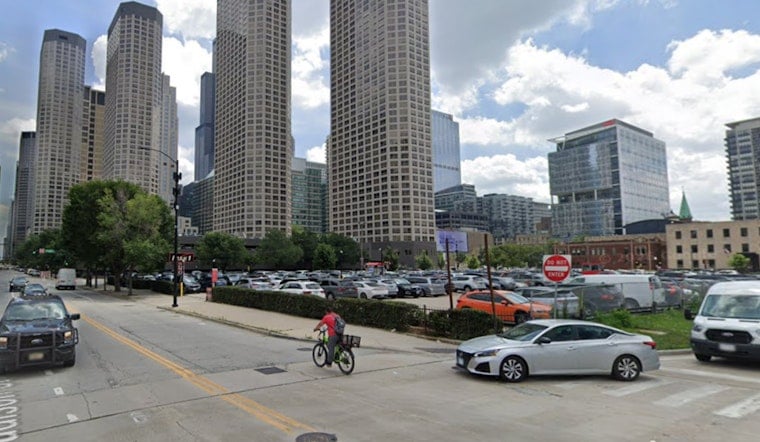
The John Buck Company has surrendered its long-planned West Loop development site at 645 West Madison Street to JDI Realty, capping a debt saga that began when Signature Bank sold its majority share of the project's $35 million mortgage note to JDI at a steep discount. The move erases Buck's equity in the two-acre parcel through a deed-in-lieu of foreclosure, ending a years-long push to build a skyscraper along the Kennedy Expressway that never landed an anchor tenant.
JDI Realty, led by Jeff Aeder, purchased the mortgage loan for $10 million, according to Aeder, after Signature Bank sold its $27 million share of the debt to the firm at a 60 percent discount, according to allegations in a lawsuit reported by The Real Deal. Signature Bank had been the lead lender on the loan, with CBI Bank & Trust and Town Center Bank each funding smaller shares after the loan originated in 2023. The 645 West Madison parcel had been appraised at $59.6 million in a late-2025 valuation, per the same report.
A Lawsuit Over a Fire Sale
Town Center Bank and CBI Bank & Trust have filed a Cook County lawsuit against Signature Bank, alleging the lead lender breached its participation agreement by selling the discounted debt to JDI Realty rather than foreclosing on or marketing the property, the report notes. The co-lenders further allege that Signature refused their demands to record the deed and market the property for sale, and that Signature sold the troubled debt to JDI ahead of its looming acquisition by Esquire Financial Holdings. Judge John J. Tully Jr. has extended Signature Bank's deadline to file responsive pleadings in the case to Tuesday, August 18.
The lawsuit also alleges that a firm called Timber Wolf Group, which submitted a discounted note offer for the debt, was secretly controlled by John Buck Company itself, and that Timber Wolf withdrew its bid once that alleged control was exposed. Aeder has said the lawsuit has no bearing on JDI's ownership of the property, and that JDI is not a developer and has no immediate plans for the site, the article notes.
Why Signature Wanted the Debt Gone
The urgency behind Signature Bank's discounted sale traces back to its pending sale to Jericho, New York-based Esquire Financial Holdings, a deal announced in May 2026 and valued at $348.4 million. Esquire Financial Holdings completed that acquisition of Signature Bancorporation on August 1, forming a combined institution with roughly $4.8 billion in total assets and $3.3 billion in loans, according to Esquire Financial Holdings. Esquire specializes in law firm financing and payment processing, and it pursued Signature specifically to expand its litigation banking platform into Chicago, one of the nation's top three metro markets for contingency-fee law firms alongside New York City and Los Angeles.
How the Project Unraveled
John Buck Company purchased the 645 West Madison site for $53 million in 2022 and initially envisioned a single 1.5 million-square-foot skyscraper along the expressway, marketed for visibility to 250,000 daily commuters. By mid-2022 the firm had pivoted to a two-tower design, with an 850,000-square-foot first phase and a 600,000-square-foot second phase connected by a five-story podium. As leasing struggled, Buck lowered its preleasing threshold from 500,000 square feet to just 150,000 to 200,000 square feet, but still failed to land an anchor tenant.
The loan backing the project fell into default under Buck's ownership, and the company entered a forbearance agreement with Signature Bank before defaulting on that agreement in February. Signature could have seized the property if the loan wasn't repaid by mid-February. Buck ultimately delivered a warranty deed to Signature for escrow, and the deed-in-lieu of foreclosure that followed wiped out the firm's equity in the site under Section 15-1401 of the Illinois Mortgage Foreclosure Law, which allows a borrower to voluntarily convey title in full satisfaction of debt while avoiding judicial foreclosure.
Buck's Broader Debt Troubles
The Madison Street collapse is not an isolated setback for the storied Chicago developer. John Buck III faced an $18 million foreclosure on a 180,000-square-foot Rosemont office building in 2024, and that property was ultimately surrendered to its lender the same year. The firm fared better with its 38-story art deco tower at 33 North LaSalle Street, where it secured a loan modification in early 2025 after Germany-based Aareal Capital provided $24.2 million to fund tenant buildouts.
Founded in 1981, John Buck Company built some of Chicago's most recognizable office towers, including 111 South Wacker Drive, completed in 2005, and 155 North Wacker Drive, completed in 2009. That legacy stands in sharp contrast to its inability to get shovels in the ground at 645 West Madison, a reminder of how far the ground-up office pipeline has fallen since downtown Chicago's pre-pandemic vacancy rate sat at just 13.8 percent.
A Market That Punishes Unbuilt Sites
Chicago's downtown office market recorded a direct vacancy rate of 27.0 percent in the first quarter of 2026 before easing slightly to 28.0 percent total availability by mid-year, ending a 15-quarter streak of consecutive record highs, according to CBRE Research data reported by REJournals. Even the West Loop, where vacancy stood at 22.8 percent in the first quarter, captured more than 60 percent of all new Class A leasing activity across the Central Business District during that period, meaning tenants are flocking to existing trophy towers rather than committing to unbuilt preleases like Buck's.
That flight-to-quality dynamic has claimed more than just unbuilt sites. In June, owner 601W Companies defaulted on a $343 million loan backed by One South Wacker Drive, a 1.2 million-square-foot West Loop tower that is 73 percent leased, according to CRE Daily. Hoodline previously reported on a similar double-default in the submarket, and other coverage has tracked tenants like Huron trimming their West Loop footprints amid the prolonged slump, even as firms like Sidley Austin commit to new flight-to-quality towers in the same submarket.
What Happens to the Site Now
JDI Realty now controls the prime two-acre West Loop block, adding it to a portfolio built on picking up distressed Chicago commercial assets at steep discounts to land value. The firm, founded in 1988, has directed more than $3.5 billion in equity and debt investments across commercial property sectors, including a 2024 purchase of a 164-townhome Chicagoland portfolio for $34 million and a partnership on the $35 million acquisition of the Innovation Park corporate campus in Libertyville.
For now, Aeder has indicated JDI has no immediate development plans for the Madison Street parcel, leaving the fate of what was once envisioned as a skyline-altering office project unresolved while the Cook County lawsuit over the underlying debt sale plays out.



