

























































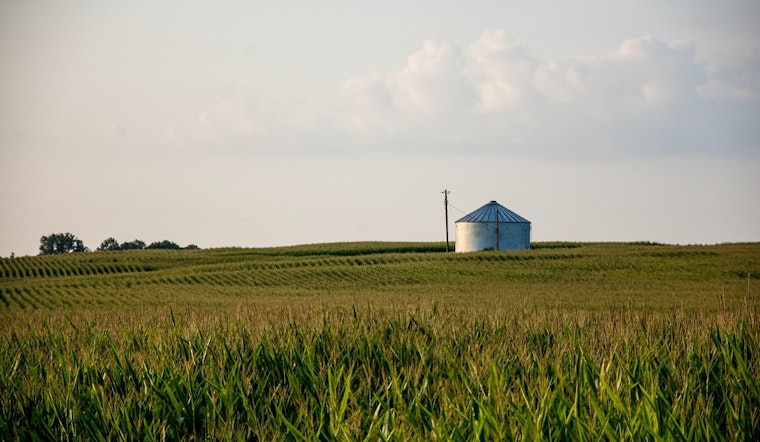
In Illinois's Beecher village, which is nestled within sweeping cornfields dotted with medicinal and industrial hemp plants, first-generation farmers Rachael and Jesse Smedberg manage the Tulip Tree Gardens farm. Covering 120 acres, this organic farm is where the couple tests sustainable practices with a dual purpose. One, to educate their community on regenerative agriculture and two, to promote earth-friendly farming practices. The expiration of the federal farm bill 2018 last month, combined with unpredictable weather patterns, has heightened demands for improved protections from farmers, workers, and advocates across the entire country according to the Chicago Tribune.
Since 1933, to guide policies concerning income support, food aid, trade, conservation, and more, Congress has passed a total of 18 farm bills. After the expiration of the Agricultural Improvement Act of 2018 (the most-recent farm bill), its laws and funding still remain in effect. However, the agricultural sector eagerly awaits a new bill, one that considers fresh challenges introduced by climate change, the pandemic, supply chain disruptions, and inflation as shared by the Journalist's Resource.
The first-ever heat-related warning for the benefit of outdoor workers was recently suggested by President Joe Biden, with a promise to build stronger climate change protections for farmers as reported in the Chicago Tribune. Despite this, the farm bill's final layout will depend on the decisions made by Congress, who is currently discussing the bill's terms related to environmental preservation.
Farmers like Smedbergs, who are directly managing and mitigating the impacts of climate change, understand the need for supporting and investing in regenerative farming practices. The effects of drastic climate changes, like the smog from Canadian wildfires affecting air quality and June's drought, was felt on their farm, Tulip Tree Gardens.
Experiments with risky methods not used by many conventional farms were initiated by them. The next farm bill could bring more funds toward preservation schemes, thus reducing the cost apprehension linked to climate-adaptive methods. With the assurance of more funds, Smedbergs hope this bill can reignite enthusiasm for such practices, motivating more first-generation farmers to become pivotal in agro-innovation as stated in the Chicago Tribune.
Regenerative farming methods like cover crops and agroforestry aim to protect the soil, flora, and fauna against harsh weather and aid environmental preservation. Despite these advantages, in 2021, only 7.2% of Midwestern farmers adopted cover crops and merely 1.5% of all American farming operations had incorporated at least one agroforestry practice in 2017 as per the Journalist's Resource.
The promising potential to of these practices is undermined by limited funding. The Inflation Reduction Act last year allotted an extra $19.5 billion to farm bill conservation programs, facilitating farmers' role in climate change mitigation for the following five years. The uncertainty surrounding the funds from the Inflation Reduction Act along with the discussions in Congress for the next farm bill, will shape the role of these programs in climate resilience as explained in the Journalist's Resource.




