

























































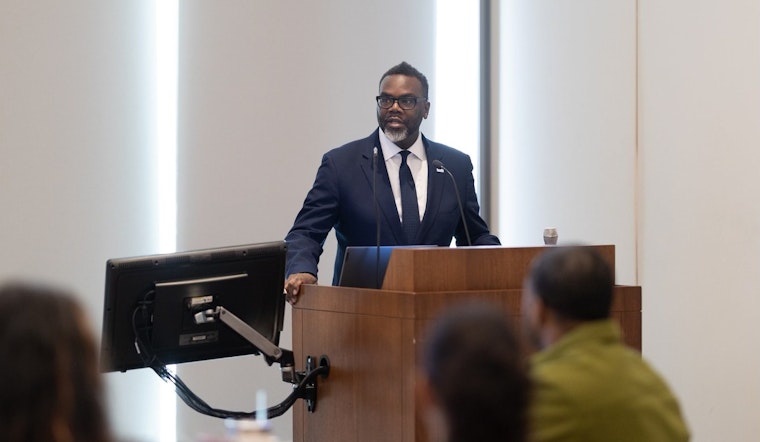
Mayor Brandon Johnson of Chicago recently unveiled his 2024 budget, promising to alleviate the financial stress of lower-income city residents. Despite his intentions, the new budget seems to rely on an additional $46 million in fines and fees, marking a 15% increase from the current year as reported by the Chicago Tribune. This move raises important questions about the potential hardships that increased financial penalties could impose on the lower-income residents the budget seeks to assist.
The mayor's budget acknowledges the unfair burden of fines and fees on low-income households, citing the disproportionate impact of parking tickets and city stickers. Nevertheless, the proposed budget assumes $348 million in revenue from sources like parking tickets and traffic enforcement fines. It also introduces the Smart Streets ordinance, aimed at cyclist protection and bus flow maintenance, as a significant infraction to enforce. However, to only generate an estimated $5 million in 2024, according to the Tribune, is the planned but unlaunched Smart Streets program.
Stephanie Agnew from the Chicago Appleseed Center for Fair Courts and the Chicago Council of Lawyers expressed concern over the emphasis on regressive financial penalties. She states that these enforcement methods are rarely worth the cost and notes that "there's little evidence showing these kinds of financial penalties are effective to deter crime or rule-breaking". Additionally, a 2022 ProPublica investigation found that Black and Hispanic ZIP codes in Chicago were issued tickets at around twice the rate of white areas, indicating that increased fines and fees may disproportionately affect these communities.
Chicago, under the leadership of former Mayor Lori Lightfoot, implemented reforms to city ticketing practices. As Chicago Sun-Times reports, these included reductions and limits on vehicle impound fines and fees, the elimination of city sticker ticket doubling, and the end of driver's license suspensions for non-driving violations. Initiatives like the Clear Path Relief program, which aimed at helping low-income drivers, provided debt reduction and manageable payment options. The continuation of this program under Johnson's plan may affect the total budget proposal.
The Smart Streets initiative has faced slow implementation and, once in effect, will primarily operate within the city center. The Active Transportation Alliance and other organizations advocate for a balanced approach to enforcement and fairness, indicating that automated enforcement policies should be data-driven. Ald. Andre Vasquez has expressed support for the Smart Streets trial and its focus on public safety, but he joins the chorus in calling for reexamining a fee structure based on income.
To handle the regressive nature of Chicago's fees and fines, Agnew and Jim Merrell from the Active Transportation Alliance suggest that the city invest in "structural solutions". They propose improvements to infrastructure, such as protected bike and bus lanes, as a means to enhance safety and limit rule violations without relying on heavy-handed ticketing.
While Mayor Johnson's $16.77 billion budget proposal may provide some short-term relief through tax stability and ongoing Clear Path Relief reductions, it is crucial to consider the potential long-term ramifications of increased fines and fees. As the city grapples with fiscal problems noted by Chicago Sun-Times, policies and planning should give central attention to equity and the protection of all residents.





