

























































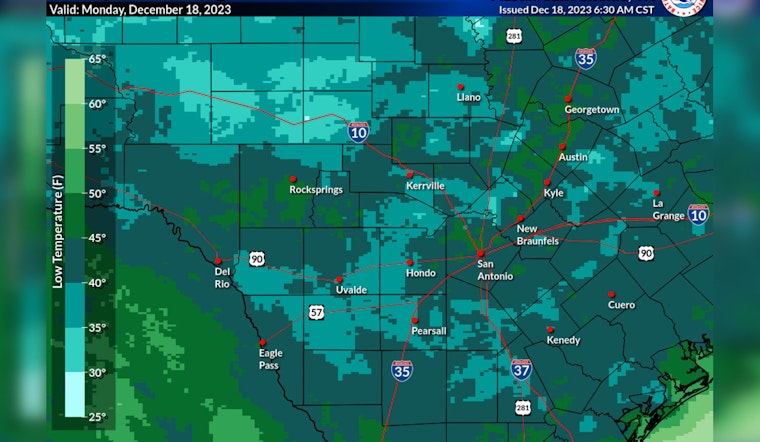
Austin experienced its season's first freeze on Monday morning, marking a temperature trend consistent with historical patterns, despite a broader narrative of climate change and warming. As per KVUE's report, a record-tying 24-degree low hit the Austin-Bergstrom International Airport, a chill not felt since 1978 on December 11, while Camp Mabry noted a low of 31 degrees, indeed demonstrating the variance that topography bestows on our city's thermal cloak.
Normally, Austin would have experienced its first freeze in the final week of November; this year the icy touch was slightly delayed, and while earlier cold fronts teased with temperatures a few degrees above freezing, it wasn't until 12/11 that thermometers dipped below that decisive 32-degree mark, as initial data sourced from KXAN indicates what's been a largely unpredictable yearly onset ranging from October to January.
Seasonal freeze comparisons courtesy of KXAN showcase an interesting trend. Austin generally expects around 12 freezes from October to March; however, climate change has gradually reduced the annual freeze frequency over the years, with current 30-year averages suggesting fewer than previous periods. This trend reflects a broader climate narrative wherein the city counts around 11 fewer freeze nights compared to 1970.
As Texas prepares for another chilly morning Tuesday, although no formal freeze warning is on the cards, the Hill Country region can anticipate more near-freezing scenarios, with residents and businesses perhaps reflecting on the spasmodic cold snaps and fluctuating freezes that seem to isolate themselves from environmental presuppositions, otherwise defining a warmer global mainstage.





