

























































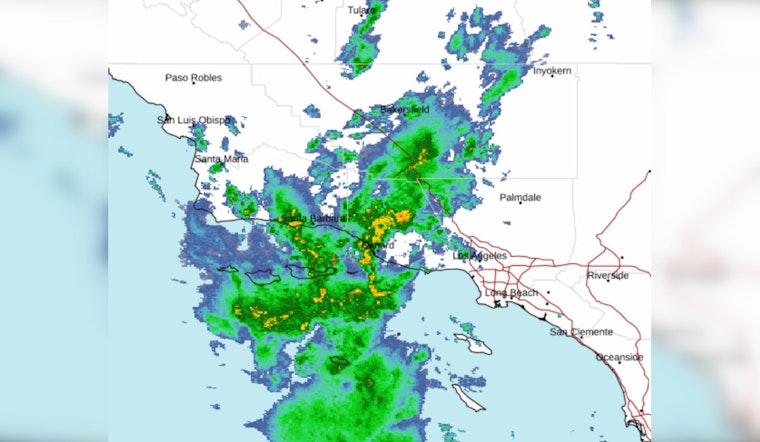
Los Angeles braces for turbulent weather ahead as the National Weather Service issues a flood watch effective through late Thursday night, indicating severe rainfall and potential flooding in multiple areas across southwest California. Residents are facing imminent roadway flooding and possible rock and mudslides, particularly in low-lying and canyon areas.
According to the detailed forecast, today's weather in Los Angeles is expected to include showers and thunderstorms with a 70% chance of precipitation. The temperamental sky could unleash anywhere between a tenth and a quarter of an inch of rain, with the likelihood of even more in thunderstorms. As night falls, the stage is set for more thunderstorms and another upsurge in rainfall, the southeast winds blowing at a steady clip of 10 to 15 mph. Friday promises a similar brew of showers and tempests, carrying a 90% probability of precipitation before taking a gentler turn with a reduced chance of rain Friday night.
Tonight's forecast calls for continued showers and possible thunderstorms, low pressure of 54 degrees, and gusty eastern winds, along with a 90% chance of rainfall that could accumulate between a quarter and half an inch. The National Weather Service stated, "Flooding caused by excessive rainfall continues to be possible," with the deluge set to affect not only Los Angeles but sprawling across several counties from Cuyama Valley to the Eastern Antelope Valley foothills.
The National Weather Service warns of a high risk of extensive roadway flooding, likely rock and mudslides on slopes and canyon roadways, as well as the hazard of flash flooding and debris flows in areas near recent burn scars. Moreover, substantial creek flooding and elevated river flows could surge to life-threatening levels amidst the storm, and swift water rescues are expected. The forecast also mentions an expected spike in river flows such as in the Ventura River. Los Angeles residents, especially those residing in prone regions, are advised to stay vigilant and be prepared to take action should flooding unfold, with rainfall rates peaking at potentially an inch per hour near thunderstorms.





