

























































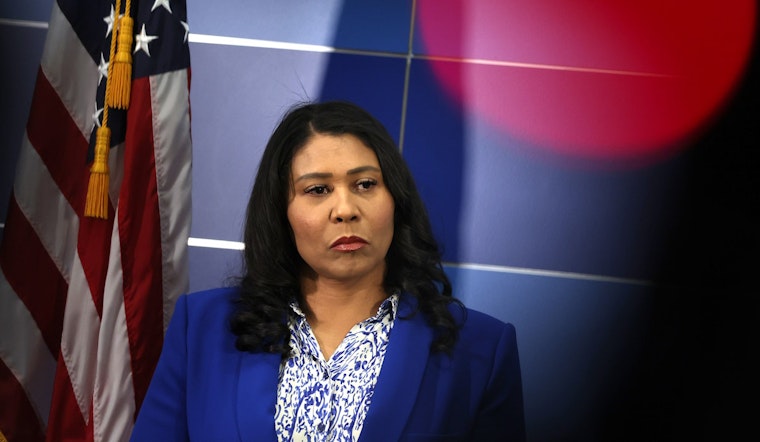
In a decisive move that seems increasingly popular among San Franciscans, Mayor London Breed confirmed that the city is all set to implement California's new conservatorship law starting January 1. While other Bay Area counties hesitate, Breed announced on X that there will be no delays in applying the measures aimed at addressing mental health and addiction issues on the streets. "We are ready to get people struggling with addiction on our streets into treatment and save lives," Breed's X post read.
In San Francisco we are not delaying — we are prepared to implement our new conservatorship law on day one. We are ready to get people struggling with addiction on our streets into treatment and save lives. https://t.co/IQ7tdpESfi pic.twitter.com/nOgIAhkwJJ
— London Breed (@LondonBreed) December 15, 2023
The expanded law, known as SB43, allows for more individuals suffering from severe substance abuse or mental health disorders to be placed in involuntary treatment. Under criticism, dragging their feet, several counties, including San Mateo and Santa Clara, have yet to set specific dates for the law's implementation, according to SFist. Governor Gavin Newsom slammed the delays, underscoring the urgency with, "We can’t afford to wait." Newsome emphasized that "people are dying on their watch."
SB43's enactment has not been smooth sailing, with several counties including San Joaquin, forecasting implementation delays until 2026, citing a lack of necessary medical facilities for the required treatments. The San Joaquin County Board's decision, detailed in the San Francisco Chronicle, comes as a stark contrast to San Francisco's proactive approach.
While San Francisco charges forward, San Mateo County's board has not yet discussed a timeline for implementing the law. Elizabeth Kaino Hopper, an advocate for the new conservatorship law, expressed frustration over the delays. In an interview with the Chronicle, she said, "All that does is continue to criminalize illness." Meanwhile, Dr. Mark Ghaly, California's Secretary of Health and Human Services, told the Chronicle that counties must begin the law's implementation before the state can assist in resource allocation, indicating that "These conversations can't happen until we really move forward with the implementation."
The state of California isn't earmarking additional funds for SB43, leaving counties to manage within their current budgets despite the tension between the necessity for immediate action and financial feasibility. Advocates for the law argue that the measure is essential for helping those with mental-health and substance-abuse issues who might otherwise only receive treatment within the criminal justice system. On the other hand, civil liberties groups worry that the law could infringe on individual rights, as per SFist's coverage.




