

























































The myth of completing a bachelor's degree within the traditional four-year timeframe is unraveling for Chicago Public Schools (CPS) students, as a new study from the University of Chicago’s To&Through Project has revealed only 30% achieve the feat, considerably trailing behind the national average. This study, titled "The Four Years Fallacy," and detailed in the Chicago Sun-Times, underscores a stark disparity, even though CPS’s six-year graduation rate slightly softens the blow at 51%.
Despite a decade of doubling college enrollees from CPS to nearly 9,000, the hurdles for students remain high, with extra tuition costs and delayed workforce entry cited as significant challenges. Students such as Nidalis Burgos and Tanvi Kapatral have shared their tribulations with the college system, highlighting a journey fraught with setbacks and struggles, and in a statement to the Chicago Sun-Times, Kapatral admitted she "felt a lot of shame" about her non-linear educational path.
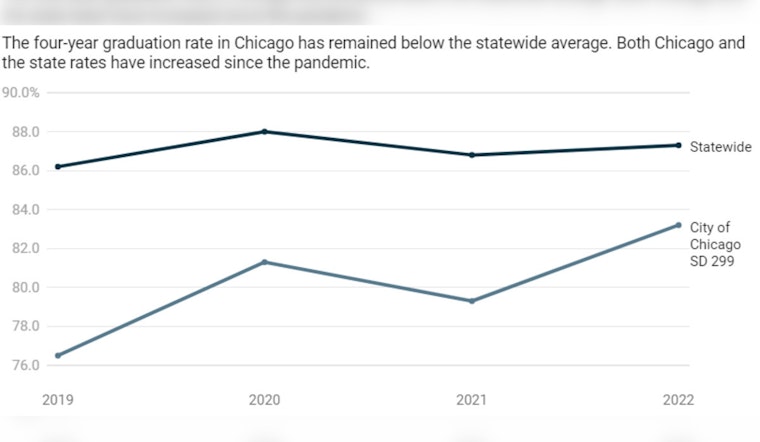
Mirroring this college completion challenge, CPS also lags in other key educational metrics. In 2022, CPS fell four percentage points below the statewide average in high school graduation rates and postsecondary enrollment, as reported by the Illinois Policy Institute. Even more concerning is the lower SAT scores for CPS students. They scored an average of nearly 23 points lower in reading and 25 points lower in math compared to the Illinois average, revealing a proficiency chasm that has only widened since the onset of the pandemic.
One glimmer of promise in the CPS system is the impact of Advanced Placement (AP) courses, which assist students in expediting their college education. The successful stories of the Pitzele brothers, as covered by the Chicago Sun-Times, point toward a beacon of opportunity within these testing times. While only 13% of black male CPS graduates completed bachelor’s degrees in four years, the authorities and the institutes are being urged to provide more substantial support, with the authors of the UChicago study highlighting the importance of better academic advice and financial resources like emergency loans or textbook access.
The educational outcomes between CPS and the rest of Illinois starkly contrast against the backdrop of a wider societal schism. On one end, Naperville Community Unit School District 203 boasts the highest graduation rates and SAT scores among the large school districts in Cook and the adjacent collar counties, while Waukegan Community Unit School District 60 lingers at the lower end. These juxtapositions, underlined by the Illinois Policy Institute, bring socioeconomic factors and educational equity to the forefront of the conversation.





