

























































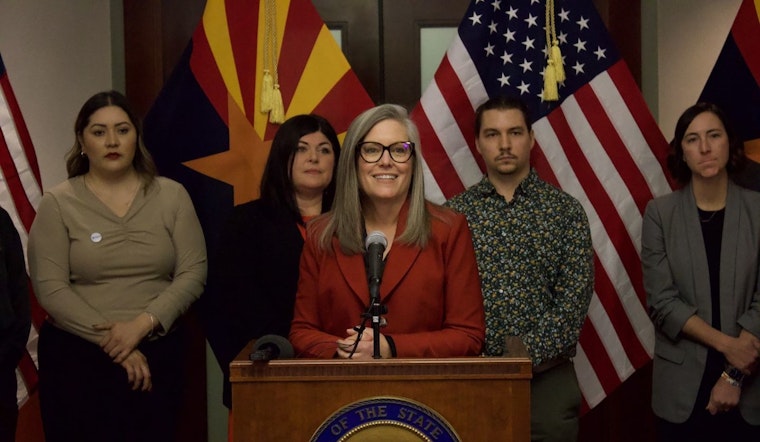
The gridlock in Arizona over the future of education funding intensified this week as Governor Katie Hobbs and Republican lawmakers dug their heels into clashing plans for the extension of Proposition 123. This is a crucial measure supporting K-12 schools in the Grand Canyon State, both camps are pushing toward a voter decision but can't seem to align their visions. According to a report by AZFamily, Hobbs has proposed an increase to the current 6.9% distribution rate to 8.9%, which she estimates could generate around $7.75 billion over the next decade. A plan that she believes would sufficiently prop up not just teacher salaries but also extend monetary support to teaching assistants, and staff and invest in school safety.
Running counter to the governor's proposal, Republican legislators are throwing their weight behind a plan that zeroes in solely on bumping teacher pay, sustaining the existing distribution rate without addressing the wider ecosystem of education staff and infrastructure needs. Governor Hobbs is in a pinch as Republicans, helmed by voices like Senator T.J. Shope, are not budging from their stance and do not require the governor's sign-off to push their version forward. She has been vague about the details of negotiations with the GOP lawmakers emphasizing the ongoing discussions without revealing where each party stands on finding common ground. The original Prop. 123 passed by a narrow margin in 2016 with strong advocacy from then-Governor Doug Ducey, suggesting that gubernatorial support isn't insignificant for public buy-in.
However, Republicans like Senate President Warren Petersen seem unfazed by this dynamic, placing confidence in their legislative discretion stating, "I appreciate that the governor is embracing our idea to use a proposition to provide teacher pay raises... And while we appreciate her input on the matter as a referral to the ballot, the issue is solely at the discretion of the Legislature, subject to voter approval," as obtained by Axios. On the other flank, Arizona Treasurer Kimberly Yee has criticized Hobbs' plan, calling it overly ambitious and financially precarious, suggesting a more conservative distribution rate aligning with Wall Street projections.
As the debate rages on with no resolution in sight, stakeholders such as Republican Representative Matt Gress and Senator Christine Marsh, a Democratic former teacher of the year, are advocating for their respective education funding approaches. While the legislative consensus seems distant, the undertone of urgency can't be understated with the current Prop. 123 set to expire next year, this escalates the matter beyond party lines into the realm of securing Arizona's educational future.




