

























































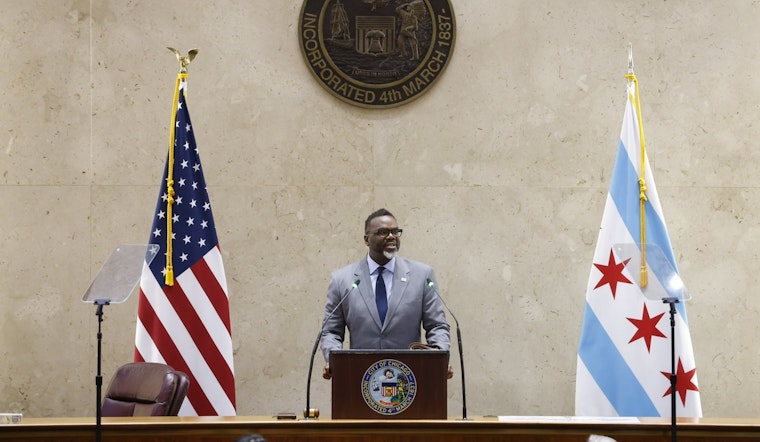
Mayor Brandon Johnson is holding the brakes on speedily embracing NASCAR's return to Chicago for 2024 and 2025, as per public statements and contract reviews that promise further scrutiny. Johnson has echoed a sentiment of cautious deliberation rather than full-throttle commitment, preferring to sift through the inherited contract crafted by predecessor Lori Lightfoot—a significant pact that converted downtown Chicago into an ad-hoc race track, WTTW News reports.
Last year's race, marked by unpredictable weather that culminated in cancellations and revisions to the racing schedule, managed to dodge major complications outside of an a lone rash individual who dashed through a barrier in an ill-advised joyride on the race course. While the city survived the test of the elements, skepticism boils over the economic benefits promised by NASCAR, which projected a $113 million boost to the local economy. However, the actual impact and whether it matched expectations remained vague in the aftermath, as detailed by the same source.
Adding fuel to the debate, The Chicago Tribune highlighted that the fiscal rapport between NASCAR and Chicago hinges on a verbal commitment rather than a concrete written contract. NASCAR has agreed to hand over an additional $2 million this year and the next, yet this handshake agreement falls short of the $3.5 million in overtime and construction costs borne by the city during the last event. The tangible economic benefits continue to be under question despite a report citing nearly $109 million in economic impact—marginally lesser than NASCAR's early estimates, The Chicago Tribune revealed.
Amid critiques, the NASCAR organization has pledged to shorten the setup and takedown time by six days for the 2024 event, showing an attempt to mitigate inconvenience for residents during the buzzing summer months. Furthermore, NASCAR is talking up plans to increase participation from small-, minority-, and women-owned businesses as vendors for the next year. Yet, downtown Alderman Bill Conway notably tagged the city’s unwritten multimillion-dollar deal as "irresponsible"—a deal that, despite its revised terms, lacks the clarity and security of ink on paper.
As the streets brace for a second lap of high-octane action, with the race settled for July 6 and 7, ticket costs edge over $300 for general admission, inclusive of fees. Ronnie Reese, Johnson's spokesman, expressed optimism that newly negotiated flat fees would ensure Chicago doesn't end up with a financial shortfall. Nevertheless, a tangible roadmap to profit still remains as elusive as a checkered flag against the backdrop of multimillion-dollar expenses and contentious judicial decisions, revealing an economic race that is far from over.





