

























































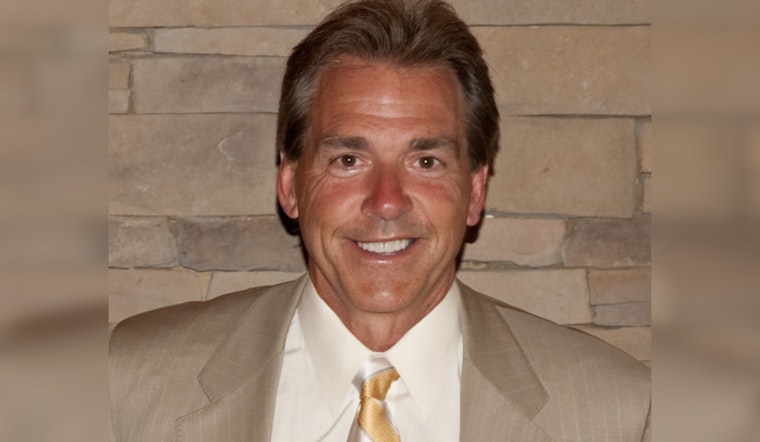
In a move that marks the end of an era in college football, Alabama's Nick Saban is hanging up the headset after a storied career that firmly plants him at the pinnacle of the sport. The 72-year-old coach announced his retirement Wednesday, a decision that rippled through the collegiate landscape. Saban leaves behind a legacy unmatched, with seven national championships under his belt, the most in the history of major college football, as reported by Atlanta News First.
Since taking Alabama's reins in 2007, Saban not only to fully restore the glory of the Crimson Tide, he managed to set a crushing record for most consecutive seasons ranked at No. 1. "The University of Alabama has been a very special place to Terry and me," Saban said in a statement, emphasizing a legacy rooted not solely in victories but the manner they were attained. Saban's retirement was also confirmed by the Associated Press, which highlighted his impact on the game and his departure amidst significant changes in the college football landscape.
Saban's remarkable career is not just about his own success; it extends to those he mentored, with several of his former assistants, like Georgia's Kirby Smart and Texas' Steve Sarkisian, finding head coaching stature of their own. "We hope that the Saban legacy will be about helping others and making a positive difference in people's lives as well as the winning tradition on the field," Terry Saban posted on the Nick’s Kids Foundation Facebook page. Alabama athletic director Greg Byrne lauded Saban as "one of the greatest coaches of all time, in any sport," stating to Atlanta News First.
The tail end of Saban's tenure did not to quite match the sheer dominance of his peak years, facing fresh challenges and evolving dynamics, including player compensation and transfer rule changes. However, even in his final season, the Tide clinched a Southeastern Conference championship and ventured deep into the College Football Playoff. Despite the shifts in college football's fabric, Saban's "process" remains a beacon. "The rules for the game of football may change, but the 'process' will never go out of style," Terry Saban wrote, a sentiment quoted by Associated Press. SEC Commissioner Greg Sankey suggested to Atlanta News First that Saban's connection to the game will endure, reasoning, "He's not walking away from the game. He’s walking away from a role."
As the sport navigates its new era, Nick Saban's departure certainly leaves a giant-sized void. His record stands at a remarkable 297-71-1, reflecting stops at Toledo, Michigan State, LSU, and the climactic chapter at Alabama—the program where he firmly cemented his legend. With an 87.7% win rate at the helm of the Tide, Saban coached the team’s first four Heisman Trophy winners and a great number of NFL prodigies, leaving behind a roll call of victories and a host of coaches following in his footsteps to sustain the legacy of the leader widely acknowledged as the "GOAT" of college football.



-4.webp?w=160&h=400&fit=crop&crop=edges)

.jpg)