

























































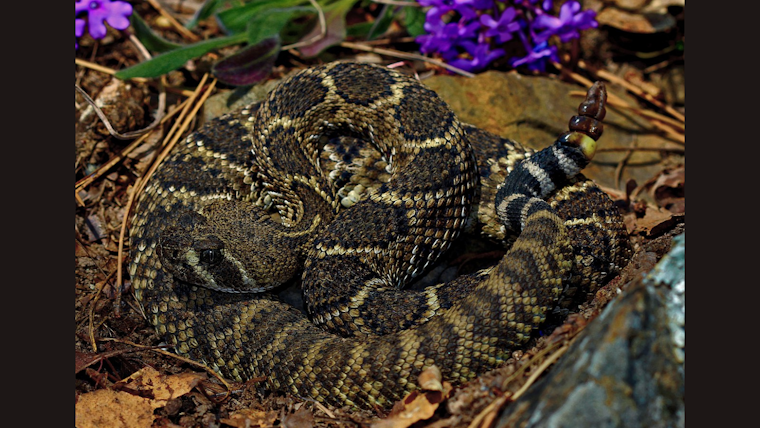
The San Diego Zoo Wildlife Alliance is pushing the boundaries of rattlesnake research with a pioneering project in one of their biodiversity reserves. In a collaborative effort with San Diego State University (SDSU) and its biology professor Rulon Clark, Ph.D., the alliance bypasses previous surgical practices to study the creatures. The novel approach utilizes external transmitters and accelerometers to keep tabs on the elusive red-diamond rattlesnakes without invasive tracking methods, as reported by the San Diego Zoo Wildlife Alliance.
Strapped with high-tech gear designed to avoid interfering with their natural habits, the rattlesnakes are being studied to provide insight into their movements and behaviors, which have long remained a challenge for scientists. Jeff Lemm, a conservation program specialist with the alliance, emphasized the ecological significance of these snakes, stating, "They have one of the smallest ranges of any rattlesnake in the United States, but the biodiversity reserve at the San Diego Zoo Safari Park is a hotspot for this species."
Each snake has non-invasive transmitters attached to their rattles, while accelerometers are carefully placed near their necks. These devices track the snakes' locations and gather detailed movement data, amassing 75 data points per second to paint a 3D picture of the snakes in action. Ensuring minimal impact on the snakes and their environment, the equipment is designed to detach naturally and be collected by researchers, further emphasizing the project's commitment to eco-friendly practices.
Unleashing the potential of machine learning, the project sets to reconstruct snake behavior when direct monitoring isn't possible accurately. Clark described the innovative approach, saying, "We’re taking some of these recently developed technologies for ecology and behavior and applying it to this type of animal. The accelerometry technology is transforming our ability to understand what animals are doing when we can’t be able to see those animals." This cutting-edge research is not only about getting to know snakes better. It also catalyzes preservation and informs potential strategies to reduce human-snake encounters that often end tragically for these reptiles.
Taking full advantage of their 1,800-acre San Diego Zoo Safari Park, of which 900 acres remain untamed, the San Diego Zoo Wildlife Alliance's effort stands as a shining exemplar of how combining academic prowess and environmental stewardship can yield transformative results for wildlife research and conservation.



_-_Flickr_-_2ndPeter.jpg)