

























































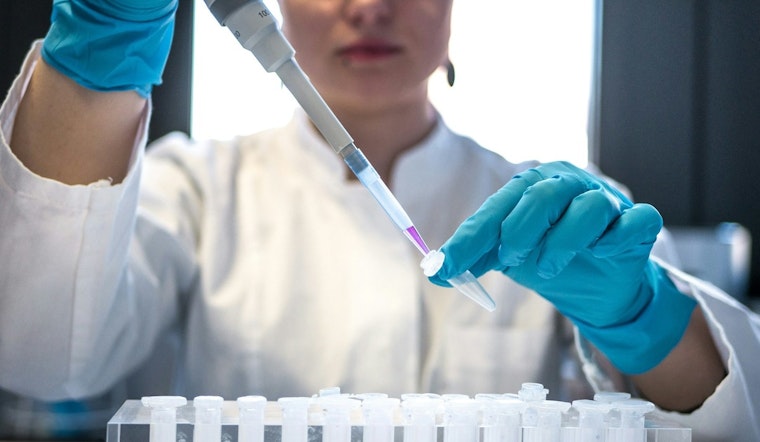
As the opioid epidemic continues to plague the nation, health officials are turning to an unconventional informant: wastewater. Samples from sewage are being tested for traces of drugs, offering real-time data on community drug use. The National Institute on Drug Abuse is backing a program that sends wastewater from 70 communities across the U.S. to Biobot, a lab in Cambridge, Massachusetts for analysis, as reported by ABC15.
These samples don't just reveal the presence of opioids. Scientists at Biobot are also picking up on methamphetamines, cocaine, and even naloxone, the life-saving drug used to reverse overdoses. "It's a really powerful tool that we haven't had when other epidemics, like the fentanyl epidemic, started to take a hold on the U.S.," Kaitlyn Hess Jimenez, senior group lead for analytical chemistry at Biobot, told Scripps News. The technique came into the limelight during the COVID-19 pandemic, proving its worth in tracking viral spread but is now being repurposed to combat a different crisis.
Unlike the delayed response from ER visits or 911 overdose calls, which can lag, this method provides swift and anonymous statistics. "We can get the sample into our lab, test it, and generate data within 4 or 5 business days," Ethan Gauvin, Biobot director of government affairs, explained to ABC15. The wastewater approach unveiled surprising trends in Cary, North Carolina, where officials discovered that most of their drug issues stemmed from legal prescription painkillers, not heroin, leading to a 40% reduction in overdoses after they adjusted their strategies.
In San Francisco, where over 800 people died from accidental overdoses last year, wastewater surveillance is validating grim statistics. "It was the highest number of record overdose deaths; the majority of those deaths do involve fentanyl," Dr. Jeffrey Hom, director of population behavioral health for San Francisco’s Public Health Department, told Scripps News. This insight offers a sharper image of the issue at hand, allowing for more precise public health initiatives.
Furthermore, Scientific American outlines that wastewater-based epidemiology, a method first employed before the pandemic to track opioids, extends beyond mere monitoring. It helps public health departments to plan naloxone distributions, outreach campaigns, and other harm-reduction efforts effectively. Scientists such as Erin Driver, an environmental engineer at Arizona State University, are building upon the fertile ground laid during the pandemic, with a public now much aware of this research, potentially leading to discoveries in other health indicators present in wastewater.
The evolution of this surveillance method underscores a new frontier in public health, where the sewers beneath our feet become the mines from which crucial data is extracted, potentially saving lives by informing and guiding efficient strategies against the ravages of addiction. For more information on the wastewater monitoring programs and their impact, you can visit the Scripps News and Scientific American websites.




