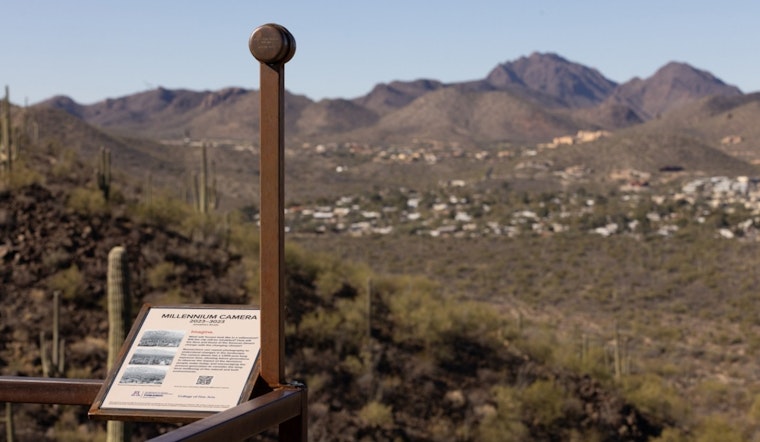
In a unique blend of art and science, researchers from the University of Arizona have deployed "millennium cameras" in the sprawling deserts near Tucson, set to capture a thousand years' worth of change. The project employs a traditional pinhole camera method, though on an unprecedented timescale that promises to document shifts in the landscape from now until 3023. Detailed by ABC15, this endeavor aims to provide insight into urban development and climate change throughout the millennium.
Jonathan Keats, an experimental philosopher and research associate at the University, is the mind behind the "Millennium Camera." Unlike previous long-exposure projects, Keats' camera is built with durability in mind, meant to surpass all records by a significant margin. Rather than having a lens that captures the passage of time, a pinhole leads to a 24-karat gold sheet that will slowly imprint an image on a rose-madder-coated, light-sensitive surface. "The thousand-year-long photographic exposure not only shows the view in front of the camera but also records how the viewshed shifts over time," the University elaborated in a statement obtained by ABC15.
Perched on Tumamoc Hill with a lookout over Star Pass, the camera invites passersby to contemplate the impermanence of their surroundings and the legacy they leave behind. A plaque accompanying the device prompts visitors to ponder the future. In a discussion with PetaPixel, Keats shared his thoughts on the project's philosophical implications. "Most people have a pretty bleak outlook on what lies ahead," he observed, suggesting that the camera serves as both a recorder of time and as a catalyst for reflection on long-term environmental and urban change.
Despite the camera's durability and intention, Keats is conscious of the many variables that could interfere over such an expansive timeframe. "One thousand years is a long time and there are so many reasons why this might not work," Keats told PetaPixel. From natural disasters to human interference, the fate of the Millennium Camera is far from certain. Nonetheless, Keats is adamant that the camera should remain sealed until 3023, arguing that peeking early would undermine its inspirational potential. "If we open in the interim, then it diminishes the imagining that we need to be doing," he stated. The camera is not only a time capsule but also intended as a prompt for present generations to actively engage in shaping a sustainable future.