

























































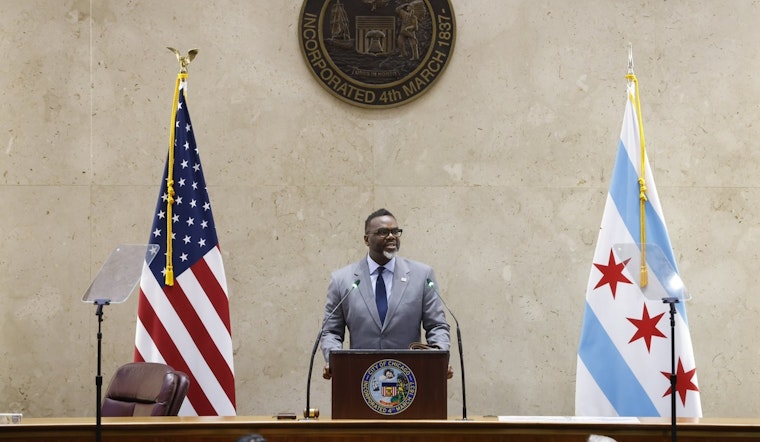
Chicago Mayor Brandon Johnson is on a mission to drastically overhaul the city's public education system, echoing a sentiment long-chanted by parents and educators for fully funded neighborhood schools. Amidst a nearly $400 million structural deficit faced by the Chicago Public Schools (CPS), Johnson's ambitious agenda presses on, aiming to alter the city's approach to public education. The mayor's efforts have been backed by a slew of progressive reforms such as the removal of police from 39 schools and a shift in the Board of Education's funding strategy to prioritize neighborhood schools over the system of school choice, as reported by the Chicago Sun-Times.
While Johnson's administration is clearly striving to make headway in transforming CPS, it has come up against a number of challenges—not least the need to urgently contend with finding new means to fully fund the educational body. The city's transition to an elected school board in January further distances the mayor from direct influence over the schools. As the Sun-Times outlines, Johnson and the Chicago Teachers Union (CTU), which heavily supported his run for mayor, have a shared vision that includes strengthening neighborhood schools. However, details are thin on the ground concerning the administration's anticipated new funding formula, which is expected to be a cornerstone of these reforms. With the last of CPS' pandemic relief funding running out this fall, the pressure to find sustainable financial solutions is on.
The vision for CPS district has also been shaped by recommendations from a transition committee, which have been laid out in a comprehensive 223-page document. Among them are proposals like creating a paid youth council to guide decisions in schools, offering full college scholarships for Chicago students aspiring to become teachers, and supporting the district's roughly 20,000 homeless students to find housing. These suggestions have been reported by Chalkbeat Chicago, reflecting both new and long-standing objectives championed by educators and district leaders.
The transition team's recommendations, which seemingly come with a weighty price tag, are demanding attention at a time when the district must brace for the reality of a post-pandemic world without federal relief dollars. The report outlines a need to not only "dismantle a learning system built on scarcity," but also to replace federal COVID relief dollars that are soon to dry up. It calls for exploring alternative revenue streams, such as a cannabis tax, and ensuring "the wealthy pay their fair share." Behind these bold moves is a central ambition, as CTU President Stacy Davis Gates stated, "Our bargaining agreement has to enshrine the base level of what every public school student should expect to have at CPS schools," as relayed to the Sun-Times.
With the considerable task at hand to transform CPS into a more equitable and well-resourced district, Johnson must now navigate through a complex landscape of policy, finance, and community expectations. It remains to be seen whether the mayor's administration and the impending elected school board can deliver on these grand aspirations for an education system that ceases to measure success at the expense of others losing, a goal Johnson articulated to the Sun-Times. Community meetings are slated as a method for developing a five-year strategic plan, ensuring parents and activists can have their input in what has become a highly politicized and deeply personal debate over the future of Chicago’s schools.





