

























































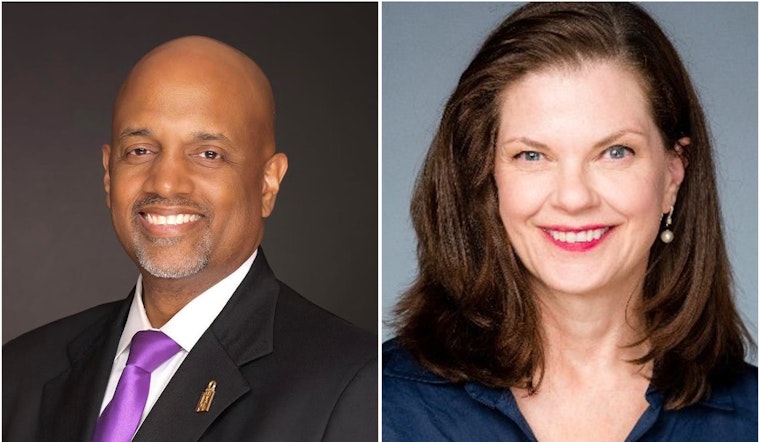
In the heat of the campaign for Cook County State's Attorney, Democratic hopefuls Eileen O'Neill Burke and Clayton Harris III sparred over policies on juvenile crimes and retail theft during their first television face-off Thursday, with public safety and wrongful convictions also taking center stage at the event. Both candidates voiced their commitment to aggressive prosecution of gun-related offenses, signaling an intention to continue balancing corrective measures with the enforcement demands of their prospective office.
Burke is pitching herself to voters as the law-and-order candidate, armed with years of experience in the legal system and a promise to reel in retail theft by adhering to the state's $300 felony threshold, according to the Chicago Tribune. Harris, however, seeks to maintain the current $1,000 threshold set by outgoing State's Attorney Kim Foxx; yet, he signaled readiness to classify break-ins and assaults associated with theft as felonies—a move that could amp up charges for certain crimes.
The atmosphere tensed further when past courtroom judgments were dredged up—Harris targeting O'Neill Burke's controversial 1994 prosecution of a juvenile, as detailed in an ABC7 Chicago report. "Wrongful convictions are not just and they don't make us safer," Harris stated, referring to a case where an 11-year-old was convicted of murder, a decision that later faced scrutiny for the possible coercion of a confession by police. O'Neill Burke countered firmly, stating, "No court has ever questioned my conduct in that case or in any case."
With early voting set to commence on February 15, the debate is poised to substantially impact the forthcoming primary—Cook County voters are faced with a stark choice between Burke's promise to tackle the systemic issues of wrongful convictions by establishing a combined post-conviction bureau and Harris' approach, which includes the formation of a new special prosecutions division targeting organized crime threats such as carjackings and gun offenses, according to information obtained by the Chicago Tribune.
The outcome of the Democratic primary is expected to forecast the winner of the general election in November, making this campaign a critical juncture for the future of criminal justice in Cook County. Both Burke and Harris, each with a history in the State's Attorney Office, are vying to succeed Foxx and reshape an office that has not been immune to the winds of change wrought by the pandemic and shifting attitudes on crime and punishment.





