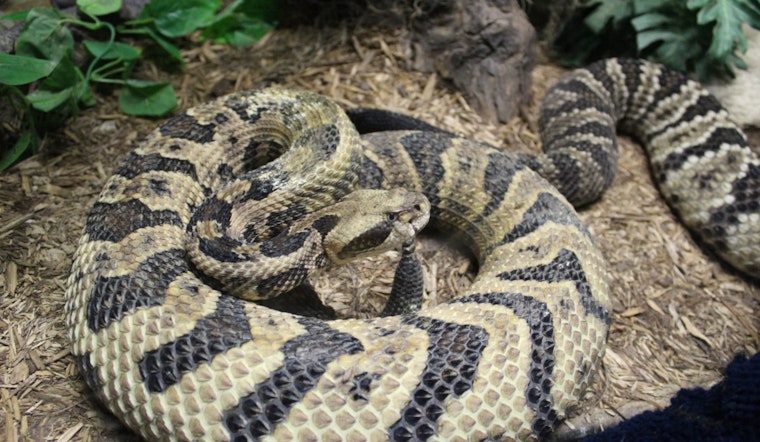
Arizonans are being warned to watch their step after a 78-year-old woman was bitten by a rattlesnake at the Spur Cross Ranch Conservation Area in Cave Creek last Saturday. Banner Health - University Medical Center Phoenix treated the woman, making it the first such incident this year -- a month earlier than when these cases typically begin to appear. The hospital typically sees around 50 to 60 rattlesnake bite patients annually, as reported by ABC15.
Martha Troy, who was planning to soon celebrate her birthday with a spa day, found her hike abruptly ended by a rattlesnake's bite. Having hiked in Phoenix for a quarter-century, Troy's luck ran out over the weekend. Despite the shock, she managed swiftly to seek aid and is recovering effectively, thanks to her background as an ICU nurse. Troy emphasized the importance of caution and swift treatment in such scenarios, stating, "Do not walk off-trail, look ahead on the ground, and back off if you hear a rattle," in an interview with 12News.
Given the early occurrence of snake bites this year, health officials are urging the public to remain vigilant about snake activity. Rising temperatures may be contributing to snakes emerging sooner. According to guidance provided by Banner Health, along with Rural Metro Fire, the U.S. Department of Agriculture, and the Arizona Poison and Drug Information Center, prevention involves cleaning up potential snake shelters, controlling the rodent population, and being cautious not to provoke wild reptiles.
"If you are bitten by a rattlesnake, don’t panic — the most important thing is to get to a health care facility for treatment as soon as possible,” Dr. Anne-Michelle Ruha, chief of the department of medical toxicology at Banner University Medical Center Phoenix, advised. Snake bite victims should immediately call 911 and may also reach out to the Banner Poison and Drug Information Center at 1-800-222-1222 for further advice, Dr. Ruha elaborated, as reported by 12News.