

























































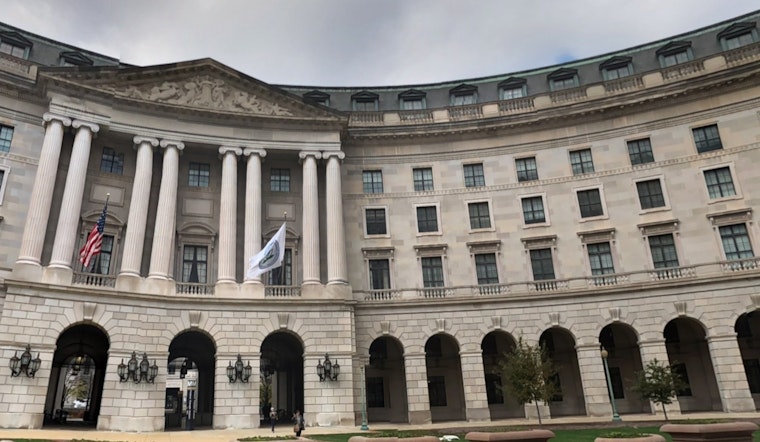
The Environmental Protection Agency (EPA) has stirred the pot with its latest move to cut down permissible levels of a deadly air pollutant. In a bid to clean up the nation’s air, the EPA announced stringent new standards on particulate matter, angering industry groups like the Portland Cement Association (PCA), which claims the new policy could cripple U.S. cement production.
The revised regulations lower the acceptable amount of fine particulate matter, known as PM2.5, to 9 micrograms per cubic meter from the previous 12. This change has drawn sharp criticism from the PCA, with its President and CEO, Mike Ireland, stressing how the new rule "strikes at the heart of the US cement industry's ability to deliver on the Biden Administration's infrastructure goals." According to Global Cement, Ireland added that "fewer hours of operation at plants" could mean layoffs and a reduction in American cement and concrete during times of increased demand.
Despite the industry pushback, the EPA has stood firm on its decision. Touting major health benefits, the agency's head, Michael Stanley Regan, was adamant, asserting, "We do not have to sacrifice people to have a prosperous and booming economy," as reported by BNN Breaking. The rule is set to save thousands of lives and drastically cut down on lost workdays due to health issues linked to PM2.5 exposure.
Indeed, the human cost of particulate pollution is high, with the particles able to penetrate deep into the lungs and cause a range of serious health problems, including asthma, lung and heart disease, and respiratory complications. As Grist reports, environmental studies have shown these health dangers disproportionately affect low-income and minority communities,situated near industrial zones. The Biden administration is aiming for a significant decrease in premature deaths through this new standard, estimated at an annual prevention of 4,500 fatalities.
Inter-industry friction is apparent, as evidence by the PCA's backlash, which comes in light of the association's claim that particulate emissions have plummeted by 37% over the past twenty years under the prior standard. Nonetheless, the EPA's projections suggest a monumental $46 billion in net health benefits from the new rule’s full implementation, hinting at a broader debate between economic interests and public health priorities that is yet to reach a resolution.





