

























































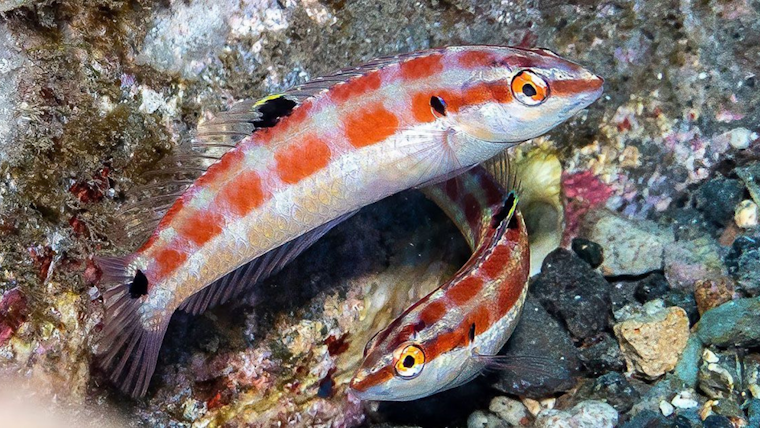
Scientists from the UC San Diego's Scripps Institution of Oceanography have hit the biological jackpot, unearthing a new fish species native only to Mexico's Revillagigedo Archipelago. Dubbed the Halichoeres sanchezi, or tailspot wrasse, this discovery has injected fresh excitement into the scientific community, according to UC San Diego's official publication.
Stumbling upon the new species during an expedition to the chains sometimes referred to as the "Mexican Galapagos," the team snagged eight specimens ranging from an inch to nearly six inches in size. These islands, a wonder of marine biodiversity and rugged beauty, are nestled some 250 miles south of the Baja California peninsula, a veritable swimmer's paradise, said Ben Frable from Scripps in a statement obtained by UC San Diego. Fishing is banned in the islands' protected waters, providing a rare glimpse into untouched ecosystems.
The tailspot wrasse was discovered near San Benedicto Island in waters about 70 feet deep littered with volcanic rubble, an area that the research team, led by Frable, identified as a habitat for this colorful newbie. The species' recognition and its christening are a nod to Carlos Armando Sánchez Ortíz from the Universidad Autónoma de Baja California Sur, who was instrumental in organizing the deep dive that brought these fish to light.
With the affirmative nod from DNA analysis confirming a genetic split from its closest relatives, this discovery brings the total number of native fish species to an impressive 14 on the isolated archipelago. "It's amazing that we can still find species that are new to science in a place where people are visiting pretty regularly – it just shows how big and complex the world is," Frable told UC San Diego, underscoring the magnitude of this marine find.
The expedition, which proved to be a blend of pluck and scholarly pursuits, was not short on thrills. A female of the species, initially mistaken for a known variant, was first collected. It wasn't until the last day of the expedition that scientists, a la Hollywood cliffhanger style, nabbed a male specimen, crucial to solidifying their discovery. The happy ending has the researchers harboring hopes of unearthing more underwater secrets with the promise of further species revelations on the horizon.
Preservation is the name of the game as the specimens now rest in revered collections at places like Scripps' Marine Vertebrate Collection, and Mexico's Colección Nacional de Peces, waiting to be dissected by curious scientists from all walks of marine life.



