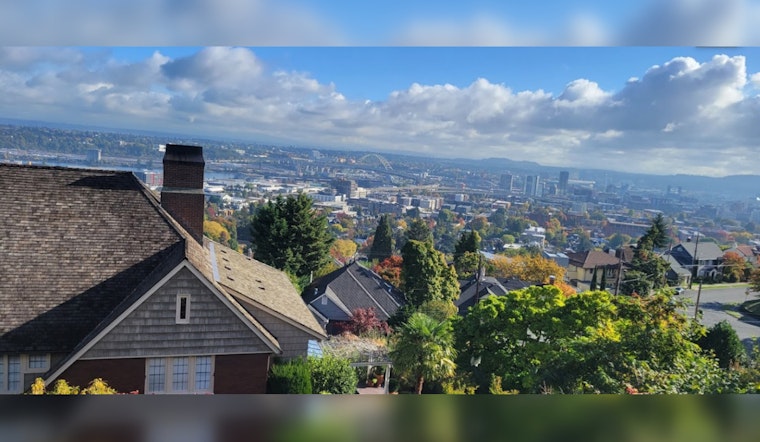
In the face of a gripping housing crisis that presents over Oregon, state legislators are now poised to reassess the once untouchable urban growth boundary law, originally enacted in the 1970s, to make way for more affordable housing. The legislation that has long protected Oregon's farmlands and natural resources from urban sprawl, praised for its role in crafting the state's eco-friendly image, now finds itself on the legislative chopping block as officials grapple with the realities of a growing population in need of roofs over their heads.
As KPTV reported, the urban growth boundary, a foundational element of the state's environmental ethos, has been called "extremely influential" by Megan Horst, an urban planning professor at Portland State University. In a statement obtained by KPTV, Horst exclaimed, "I can't overstate it. All that farmland would likely be a sea of strip malls and subdivisions, as they are pretty much anywhere else in the country."
Under pressure to address the lack of low-income dwellings, newly appointed Governor Tina Kotek has put forth a housing package. According to a Fox News article, this would be Kotek's debut legislation during this year's short legislative session, marking a pivot from her progressive roots as Oregon's House Speaker to a governor willing to ease restrictions and encourage home construction for advancing housing production goals.
Adding to the details, Planetizen outlined the bill's proposition for a one-time exemption that would allow cities to expand their urban growth boundaries to accommodate new housing—a significant departure from the current policy which mandates a 20-year outlook for such changes. However, the bill stipulates that 30 percent of new housing must be affordable, a measure to ensure that lower-income residents aren't left behind by the newly expanded boundaries. Despite these concessions, cities would still be obliged to demonstrate a true need for land before development could proceed, preserving "high-value" farm or forest lands from being indiscriminately consumed.
With the legislative clock ticking down to a March 10 deadline, the Oregon state legislature has a narrow window to navigate the complex interplay of environmental conservation and the dire need for affordable living spaces. Such decisions will shape the green state's landscape, literally and figuratively, for decades to come, as they strive to uphold Oregon's legacy while carving out a future where its residents can afford to call it home.