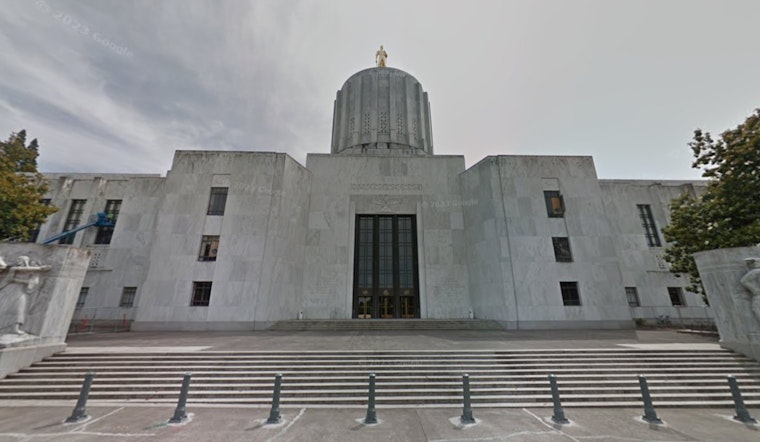
The Oregon Supreme Court has knocked down the political aspirations of ten Republican senators, delivering a decisive ruling that bars them from re-election bids after they took part in a walkout to block legislation last year. The group, which engaged in the state's longest quorum-denying absence to stall bills over guns, abortion, and transgender health care, had challenged their disqualification under the Measure 113 statute—a voter-endorsed amendment aimed at deterring legislative boycotts, as reported by the Oregon Capital Chronicle.
In an unprecedented move, the high court upheld the Secretary of State's exclusion of the senators from the ballot, interpreting the constitutional amendment which penalizes lawmakers for recording more than 10 unexcused absences, the justices unanimously ruling against the GOP senators who defied the measure passed with nearly 70 percent support back in November 2022; to their detriment, the court's decision casts a long shadow over the immediate political landscape given that Measure 113 was fashioned not to merely alter the legislative quorum threshold but introduce an accountability mechanism for absences.
The political fallout of the decision is pronounced--Senate Minority Leader Tim Knopp and Sens. Brian Boquist, Lynn Findley, Bill Hansell, Dennis Linthicum, and Art Robinson are required to conclude their tenures in January, according to the Oregon Capital Chronicle, while Sens. Daniel Bonham, Cedric Hayden, Kim Thatcher, and Suzanne Weber are now prohibited from seeking reelection in 2026. Despite the ruling, Knopp maintained an air of defiance, suggesting that Republicans could still gain strategic advantages in the legislative process. “If the court sides with us, it’s a clear victory,” Knopp asserted. “If it doesn’t, I think we still win because our members literally have no reason to show up, and so in order for them to show up, they’re going to want to see that they’re going to be able to make a difference,” he told the Oregon Legislative Correspondents Association.
With the legislative majority at the cusp of beginning a session focused on housing and the state's addiction crisis, the enforcement of Measure 113 complicates an already tense political atmosphere, Democrats' proposals to tweak voter-approved drug decriminalization laws, met with Republican calls for harsher penalties AND mandatory treatment, underscores the contentious divide that may yet again culminate in the GOP utilizing the walkout tactic, the potential for another standoff looms as Knopp hints, “I’m not predicting a walkout at this point, but we’re not taking it off the table,” in an interview highlighted by the Oregon Capital Chronicle.
The Supreme Court's decision underscores a contentious era in Oregon politics where strategies once employed as last-ditch efforts have now been curtailed by voter referendum—a clear signal that the electorate demands presence and participation, even as political divides deepen. The verdict rendered Thursday was not only a judicial affirmation of Measure 113, but also a testament to the will of the Oregonian public which, as reported by WWeek, sought to curtail the power of absent lawmakers in a state uniquely bound by a two-thirds quorum requirement.