

























































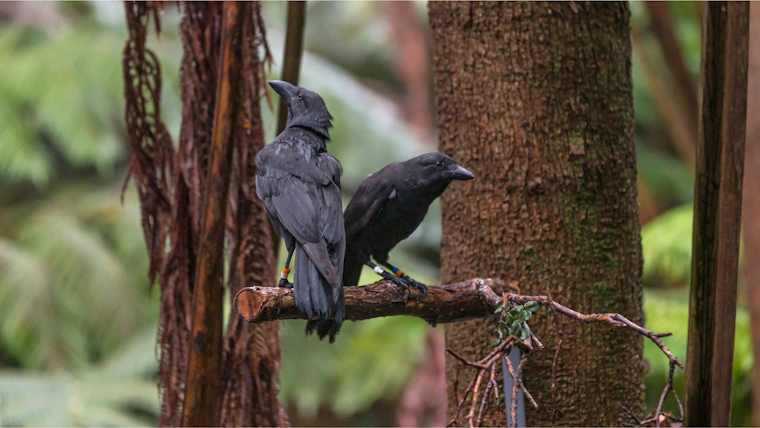
The San Diego Zoo Wildlife Alliance is delving into the personal lives of the endangered ‘alalā, or Hawaiian crow, to save the species. Scientists have adopted an eHarmony-like approach to matchmaking, profiling the birds' personalities to spark romance and, more critically, encourage breeding success. A recent study highlighted by the alliance has found that the ‘alalā pairs with contrasting personalities — particularly aggressive males paired with less aggressive females — were more likely to produce fertilized eggs.
As described in a publication by Animal Conservation, caretakers assessed 69 male and 59 female birds by 22 different personality traits. The results indicated that opposites do indeed attract when it comes to these feathered creatures. "Unlike most of our scientific analyses, this study relied on caretakers' opinions to determine birds’ personalities,” Dr. Alison Flanagan, a recovery ecology researcher at the alliance, revealed to the publication. She likened the process to creating a kind of bird dating app to boost breeding odds for a species on the verge of extinction.
But it's not just about finding the perfect ‘alalā match. Additional research published in the journal Frontiers in Conservation Science showed that the birds' age rather than the duration of their courtship is vital for breeding success. Contrary to previous beliefs, the researchers found no “reproductive penalty” for swapping partners among the ‘alalā. This insight could open the door to more blind dates for these birds, focusing on a results-driven approach to conservation efforts.
There's more to it than just setting up the right profile. Strengthening relationship-building skills is crucial for the ‘alalā—both in captivity and once they're released back into the habitat, detailed another study from Zoo Biology. Emphasizing couple compatibility, scientists encourage the birds to behave naturally by building their nests and allowing moms to incubate the eggs naturally. Furthermore, a different paper in Conservation Science and Practice suggested that adjusting the placement of feeders in the forest can help the ‘alalā more quickly adapt after release into the wild, teaching them to forage in their new environment while still having access to food.
The implications of these findings are not just academic. They're practical steps toward reintroducing the ‘alalā to the wild, with plans for a pilot release on Maui, approved by the Hawaii Department of Land and Natural Resources and the U.S. Fish and Wildlife Service.


