

























































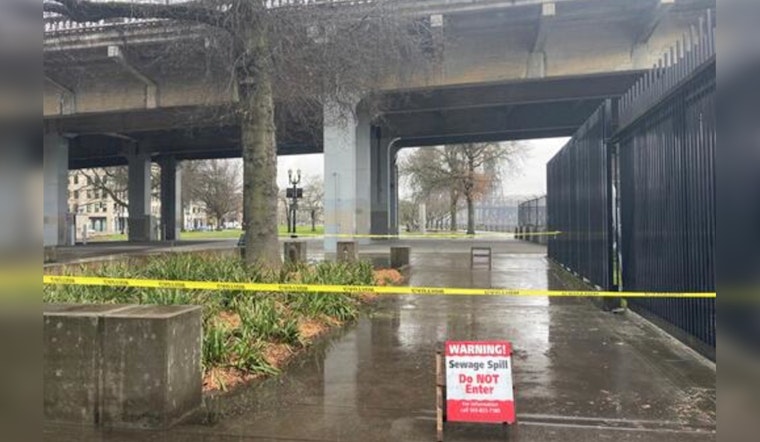
Portland's west-side residents woke up to a stinky situation this morning as city crews scurried to address a sewage spill under the Burnside Bridge. The unsavory incident occurred at Waterfront Park, where the quantity of waste that seeped out remains unknown. The spill, partially flowing through a storm pipe, likely reached the Willamette River, prompting warnings for the public to steer clear of the area. Portland's Environmental Services has put up signs and barrier tape as a deterrent while the cleanup is in process.
The situation, though an environmental hiccup, is said to unlikely cause significantly elevated bacteria levels in the river. Nevertheless, officials are advising people to play it safe and avoid any contact with the river waters near the bridge for 48 hours. The spill traces back to one of the city's 99 pump stations, tasked with ushering sewage to treatment plants. It appears one of the pressurized pipes was the culprit, which has since been shut down to urgently undergo repairs.
In these moments of municipal mishaps, environmental vigilance becomes paramount. The city is calling upon Portlanders to remain observant and to swiftly report any further sightings of sewage discharge. As crews work to remedy the current spillage, the incident prompts a communal reflection on the underlying skeleton of our city's infrastructure—laid bare in moments like these, revealing the demands of constant maintenance and the threat of unforeseen failure.
While the cleanup continues, the impact of the spill extends beyond mere inconvenience or visual unpleasantness. This glitch in our wastewater systems serves as a reminder of how deeply connected urban life is to the veins that run beneath it—pipes, pumps, and the human effort to keep the flow unbroken. As the city surveys the damage and fortifies the breaches, Portland once again considers the resilience and vulnerability of its conduits and the treasures—like the Willamette—that they must guard.




