

























































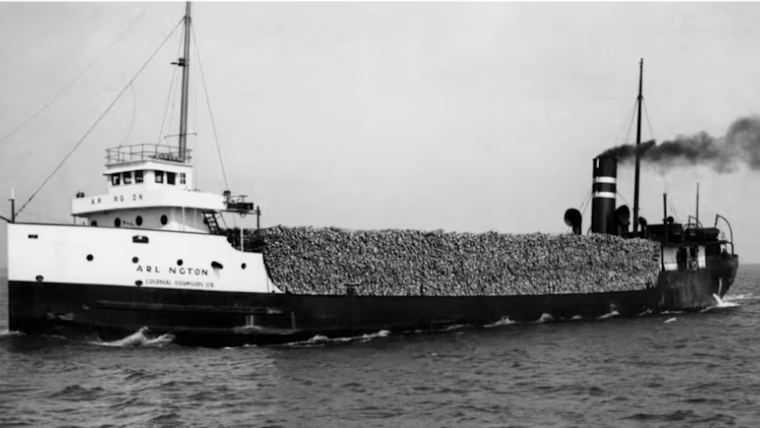
The depths of Lake Superior have long concealed the remains of the SS Arlington, but no longer. A WWII-era ship with a tale as mysterious as its final plunge, the Arlington was recently discovered over 600 feet underwater, 35 miles north of Michigan's Keweenaw Peninsula. This find, a 244-foot bulk carrier dating back to 1940, offers a glimpse into a maritime enigma that includes questionable choices by its captain and a crew left to fend for themselves in trying weather.
Initially spotted by shipwreck researcher Dan Fountain after he noticed a "deep anomaly" in remote sensing data, the discovery was made in collaboration with the Great Lakes Shipwreck Historical Society (GLSHS). The society confirmed the identity of the wreckage using advanced side-scan sonar technology provided by Marine Sonic Technology and further investigations with a remotely operated vehicle, according to CBS News Detroit.
A closer look at the Arlington's last voyage paints a picture of a fateful day that started in Port Arthur, Ontario. Under the command of Captain Frederick "Tatey Bug" Burke, the ship set off laden with wheat, destined for Owen Sound, Ontario, as per MLive. Misfortune struck in the form of a dense fog followed by a severe storm. Despite first mate Junis Macksey's advice to take shelter along the Canadian North Shore, Captain Burke insisted on maintaining the ship's original course, a decision that would prove dire.
"The Arlington started to take on water. Out of fear for their lives, and without orders from Captain Burke, the crew began to abandon ship on their own," ClickOnDetroit reported. Dramatically, each crew member managed to escape aboard the nearby freighter Collingwood, all except for Captain Burke. Speculation whirls around his final actions; he was last seen near the pilothouse, seemingly waving to witnesses from the other ship instead of joining his crew to safety. The motivations behind his decision to stay aboard remain as shrouded in mystery as the depths where the Arlington now rests.
Bruce Lynn, Executive Director of GLSHS, emphasized the spirit of collaboration that brought the discovery to light. Noting that the reveal of Arlington's location is a testament to the symbiotic relationship between historians, researchers, and residents drawn together by their dedication to unraveling the past’s enigmas. This recent discovery not only offers closure to maritime historians but also to the ancestors of Captain Burke who no doubt have long pondered the fate of the curious captain and his ship.





