

























































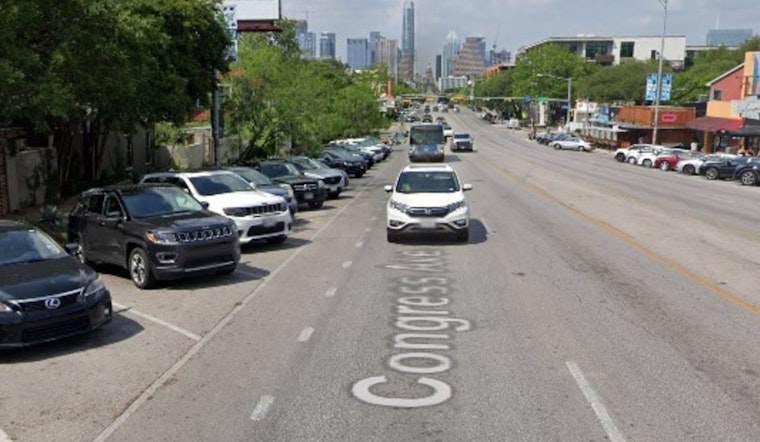
Motorists cruising the bustling streets near South Congress in Austin can breathe a slight sigh of relief as parking options are set to expand, according to KXAN. The city has unveiled that parking spaces, once restricted, will open for public use with the aid of a mobile app, and its partnership with tech platforms like Way.com and Park ATX. This move is a play by the city to manage the high demand for parking in the area, ensuring more turnover and availability for drivers.
Making use of the Park ATX app, easily available for download from "trusted sources," users can now pay, manage, and if necessary extend their parking time without much hassle, despite the appearances of several fraudulent websites posing as the app. And, as a sweetener, the city has dangled a carrot with two daily codes, FREE15ATX1 and FREE15ATX2, which are good for 15-minute free parking stints, this is a way to "create more parking space turnover in a high-demand district," the City said, as cited in KXAN report.
Yet, while more parking sounds good for drivers, a broader debate emerges when it intersects with housing affordability across car-crammed Texas. Some advocates contend that the state's typical minimum parking requirements drive up construction costs and, by extension, housing prices, as reported in FlaglerLive. Austin has skirted ahead, becoming the first major city in Texas to ditch such parking mandates in a bid to tackle its housing affordability crisis and encourage public transit and denser, transit-friendly development.
"A city like Austin that has adopted progressive mobility, affordability and climate goals should not be in the business of requiring an arbitrary amount of car storage in every new development," Austin City Council Member Zohaib "Zo" Qadri notably stated after the city's bold decision a recent report mentioned these changes could cause developers to build less parking, relying on market demands rather than city dictates to determine how much parking makes sense financially.
The aftermath in cities elsewhere who've ditched parking mandates has been promising with cities like Minneapolis and Seattle, observing a boom in housing development, pointing to a correlation between reduced parking obligations and increased housing options. However, the transition has not gone uncontested, with Dallas residents voicing concerns over developers skimping on parking spaces, potentially causing a spillover effect into residential neighborhoods, yet, despite such pushback, the path Austin has embarked on sets a precedent, questioning the century-old paradigm that cars should dictate urban design, a query echoed by cities and towns across Texas considering the true cost of free parking.





