

























































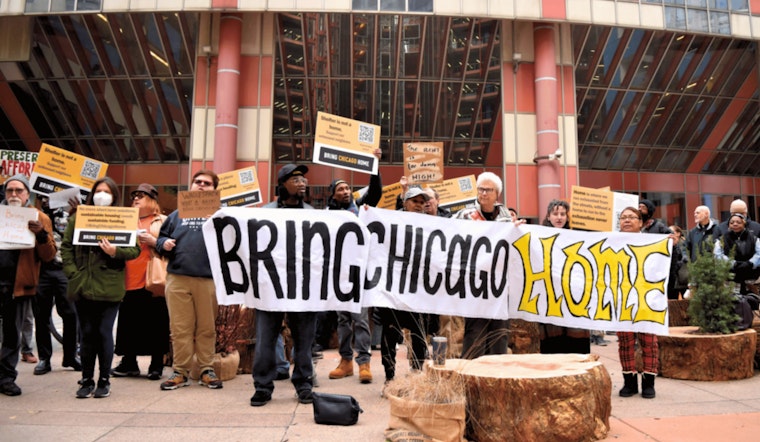
Chicago's bid to fight homelessness by taxing pricey real estate deals hit a wall, with voters saying "no thanks" to the "Bring Chicago Home" initiative. The defeated referendum, riding on the hopes of generating an annual $100 million for homeless services, fell short as the electorate favored their wallets over a progressive reshaping of the property tax landscape.
The controversial measure, championed by Mayor Brandon Johnson, wanted to up the ante on the city's real estate transfer tax for properties selling over $1 million, NBC Chicago reported. Instead, a 53.2% majority halted the plan in its tracks. While late mail-in votes had a moment, they did little to budge the early Election Night preliminary figures.
The failed initiative could have eased the tax burden on 94% of city properties valued under the $1 million mark, sifting more from the high-end sales. Meanwhile, opponents feared the tax could become a repellent, driving businesses away from a downtown still licking its wounds post-pandemic. Chicago's Building Owners and Managers Association, vocal critics from the get-go, reiterated their plea for inclusive problem-solving post-defeat. “Not only do we need to address the critical challenge of homelessness,” Farzin Parang, BOMA/Chicago executive director said, “we also need to develop a plan to rebuild our downtown and bolster our neighborhoods,” as NBC Chicago obtained in a statement.
The pushback from real estate groups who stand firm in their stance included an initial legal victory that stumbled in the higher courts. The Illinois Supreme Court eventually turned down their plea for appeal, as referenced by ABC7 Chicago. Even with legal avenues exhausted, the public has spoken and the "mansion tax," as it was less affectionately dubbed, won't see the light of day.
Supporters of the referendum, spearheaded by grassroots efforts from the Chicago Coalition for the Homeless, vow to push on. "While we are disappointed in the results, we continue to stay focused on what matters most: the building of a long-term movement for housing justice," their statement declared. They see the battle for providing permanent housing and services to Chicago's 68,000 homeless residents not as over but evolving, insisting that housing remains a human right. This sentiment was echoed by the coalition through a statement released after the referendum's dust settled as noted by ABC7 Chicago.
Another race under the Illinois Primary spotlight, the Cook County State's Attorney's face-off, clings to a razor-thin margin with Eileen O'Neill Burke edging ahead of Clayton Harris III. The definitive outcome of that contest remains a nail-biter, staying true to Chicago's reputation for political theater.




