

























































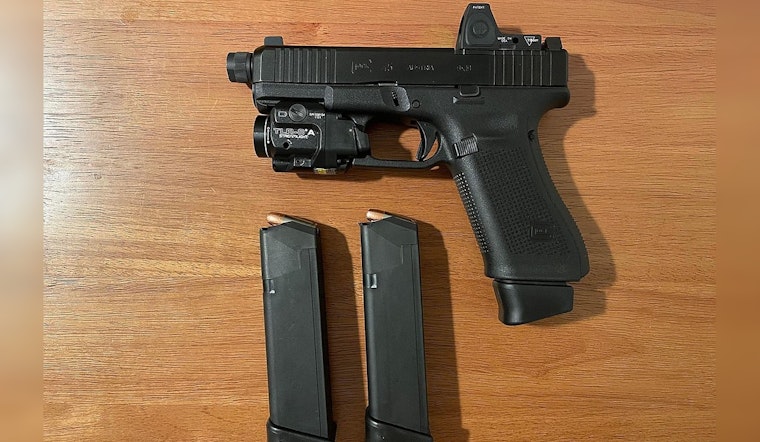
In a bold legal maneuver, the city of Chicago aimed firearms manufacturer Glock, Inc., filing a lawsuit that accuses the gunmaker of selling handguns too easily modifiable into illegal machine guns, as reported by NBC Chicago. This lawsuit claims Glock's design negligence has directly contributed to the surge of gun violence plaguing the city. Eric Tirschwell, Everytown Law's executive director, underscored the gravity of the issue stating, "Glock has known for years that its pistols are uniquely susceptible to being converted to illegal machine guns."
According to the Tribune's early look at the lawsuit, Glock's flawed design allows a straightforward modification that transforms semi-automatic pistols into weapons with the destructive power of a fully automatic firearm. Utilizing "auto sears" or "switches," the guns can discharge multiple rounds with a single squeeze of the trigger. The easy accessibility to such modifications, available for as little as $20 to $25, has created an environment where modified Glocks amplify the terror felt by ordinary Chicagoans.
The deputy mayor of Community Safety for Chicago, Garien Gatewood, conveyed the distressing rise in such weapons, noting, "People are seeing things they've never seen before. From the amount of gunfire that comes from a handheld machine gun. It’s a problem for citizens around the city. It’s a problem for law enforcement." The city's law enforcement officials have confiscated over 1,100 modified Glock pistols in the past two years, often after violent incidents, including shootings.
While the Illinois State Rifle Association has called for the dismissal of the lawsuit, arguing that individuals will always find alternative methods to modify weapons, city authorities are moving forward. Glock, meanwhile, has yet to respond to the lawsuit publicly. The debate centers on responsibility and prevention, with the city seeking not only monetary damages but also a halt to the sale of these modifiable pistols to non-law enforcement personnel in Chicago. An upcoming hearing on the matter is scheduled for mid-July at the Cook County's Daley Center.





-4.webp?w=160&h=400&fit=crop&crop=edges)
