

























































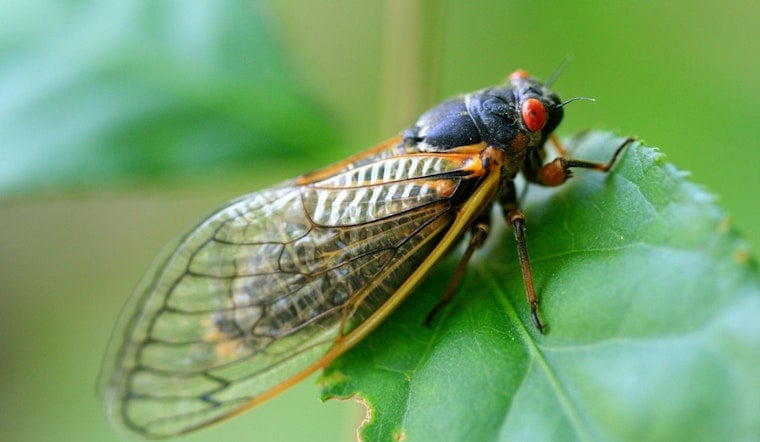
This summer, Illinois is poised to become the epicenter of a historic cicada convergence, witnessing the simultaneous emergence of two distinct broods in an event not seen since the early 19th century. Scientists and bug enthusiasts are gearing up for the mass appearance of Brood XIII and Brood XIX, which, combining for seven species of cicadas, will erupt in both song and sheer numbers throughout the Prairie State, as reported by the Chicago Tribune.
Brood XIII, due to crawling out from northern Illinois soils, consists of three species on a 17-year cycle. To the south, Brood XIX, which operates on a shorter 13-year cycle and includes four species, will make its presence known simultaneously. It's a rare spectacle that last occurred over two centuries ago when Thomas Jefferson helmed the presidency and Illinois wasn't even a state yet, the University of Illinois Extension notes.
These early birds, or early cicadas, could pop up in far southern Illinois, four years ahead of their scheduled 2028 emergence. This phenomenon is just one piece of a larger puzzle that has scientists, like biology professor John Lill from George Washington University, flocking to the state. "The confluence of space and time is happening in the state of Illinois in particular," Lill told the Chicago Tribune. "Any single spot in the entire state will have cicadas, as far as I can tell from the maps ... the suburbs and the cities, any place there's trees."
Not only are these bugs historic, but they're also harmless. The talk of cicada apocalypse is needless fretting; they don't bite, sting, or poison — a common misconception the experts are keen to dispel. Still, anyone with a fresh tree or shrub might witness the little critters up close as they descend upon any decent woody plant to reproduce. According to the Chicago Tribune interview with Martha Weiss, a professor of biology at Georgetown University, "We want more than coexistence. We want appreciation, admiration for the cicadas. They don't hurt you. They can't bite you. They can't sting you. They're not poisonous, and they are just making use of the space that they've been living in."
With the periodical cicadas set to emerge once soil temperatures hit 64 degrees at a depth of 8 inches, typically in late May or early June, the unusually warm winter could hurry that schedule along. "We're kind of anxious because we're planning our trip to Chicago based on our best guess on when the cicadas are going to be emerging," Lill expressed concerns to the Chicago Tribune. This year's dual emergence is an unexpected twist, spurred by climate change that could see these buzzers making their debut earlier than anticipated.
For those intrigued by the natural phenomenon, the cicada songfest is imminent, and as the adult cicadas break out of their shells and spread their wings, Illinois' trees will hum with an age-old cycle resumed. Male cicadas will stake out perches on branches to belt their unique birdsongs, beckoning the females of their species. Post-mating, the female cicadas deposit their eggs, completing a life cycle that, in a matter of weeks, sends both adults and their progeny off in separate ways — the adults to their end and the nymphs into the soil for another 13 or 17 years of underground growth. As the University of Illinois Extension describes, it's a process that begins anew, as timeless and undeterred as the cicadas themselves.




