

























































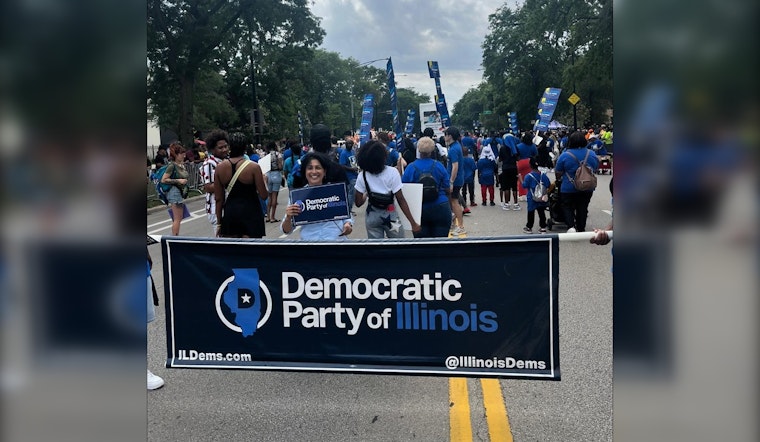
Democrats in Illinois are gearing up to defend their supermajorities in both chambers of the General Assembly in this year's elections, despite several incumbents facing primary battles on March 19. The party has been in control of both chambers since 2003, buoyed by a redrawn map of district boundaries that helped them maintain their hold in 2022. Now, all 118 House seats and 23 of 59 Senate seats are up for grabs, according to a Chicago Tribune report.
In one of the headline races, incumbent state Sen. Natalie Toro of Chicago is facing three Democratic challengers in a contest marked by significant fundraising. Toro, who was appointed to her seat last year, leads with a war chest bolstered by close to $1.3 million from the Senate Democrats’ campaign operation— and another $250,000 from state Senate colleagues, campaign finance records show. Her opponents include Graciela Guzmán, a Chicago Teachers Union organizer who has raised more than $240,000 from teachers' unions, Dr. Dave Nayak who's self-financed $625,000 into his campaign, and Geary Yonker, a community organizer with a fundraising total of just under $7,000 at the beginning of the year.
The primary election highlights the shifting dynamics within the Democratic Party in urban areas like Chicago, where progressive candidates are growing in influence. For instance, Toro's predecessor, Cristina Pacione-Zayas, joined the administration of Chicago's recently elected Mayor Brandon Johnson, known for his progressive stance, after defeating a more conservative Democrat. Toro, meanwhile, is fighting to establish her progressive credentials as she introduced legislation on rent control ordinances and fertility preservation coverage, according to her interview with the Chicago Tribune.
Comparatively, New York Democrats, after facing setbacks on Election Day, nevertheless seem set to maintain their supermajorities in the state Senate and Assembly, enabling them to override potential gubernatorial vetoes. Despite Republican gains in New York City, Democrats appear poised to hold onto 102 seats in the Assembly and at least 41 seats in the Senate, which is just one short of the supermajority threshold, as reported by NY1. This stronghold remains critical in a state where crime has been a dominant issue, yet the Democratic leaders dismissed the narrative that their policies were to blame for recent increases in crime rates in New York City.
Despite the spirited primaries, the Democratic Party's overall objective remains to retain its legislative dominance in states like Illinois and New York. As the primaries set the stage for general elections in November, candidates are buckling down on both fundraising and getting their policies in front of voters. For Republicans, these races offer a chance to capitalize on potential Democratic fractures and priorities like crime that resonate with constituents, yet the GOP also must contend with the Democrats' significant funding advantages and longstanding control of the legislature.




