

























































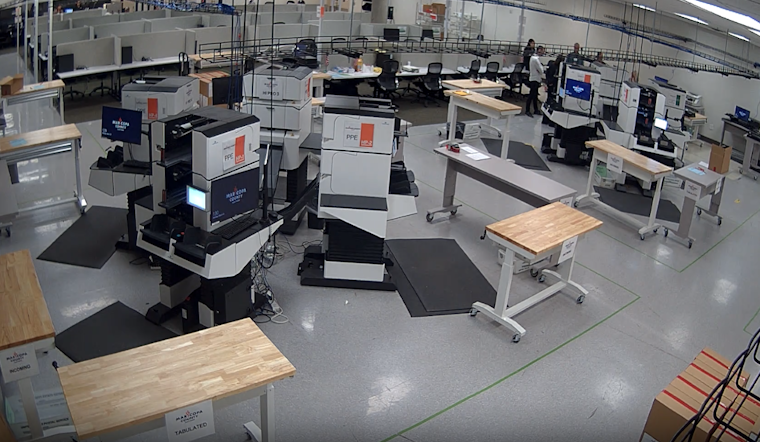
Arizona is bracing itself for another election season marred by controversy and distrust. Maricopa County, in particular, has improved its security around its vote-tabulating machines with guards, limited access, and shatterproof glass—a reflection of the increasing tension and mistrust surrounding American elections. Stephen Richer, the county's recorder, emphasized the crucial nature of such measures, stating, "What would be even more of a shame is if we couldn’t look the workers in the eye and say we’re doing everything possible to make sure that you’re safe," in a statement obtained by ABC15.
Conspiracy theories and misinformation have plagued Arizona's electoral process since the 2020 presidential elections, leading to an atmosphere of intimidation and anxiety for electoral staff. The security at vote-counting centers has become necessary as the state has borne the brunt of persistent attacks and unsubstantiated claims of voter fraud. As a result, election officials face escalating threats—some have even resigned in the face of personal attacks. Secretary of State Adrian Fontes disclosed that the electronic systems of the state were even targeted by hackers, as reported by ABC15.
Heading into the upcoming elections, Adrian Fontes and Richer are working to restore voter confidence and combat misinformation. Fontes, a former Marine Corps vet, has introduced a variety of strategies, including "tiger teams" that deal with potential disinformation efforts, which may include deepfakes or similar technological deceptions, according to an interview by the Los Angeles Times. This militaristic diligence is complemented by efforts to disseminate accurate information about the electoral process.
One notable initiative is a new system for keeping voters informed via text message about the journey of their ballots—from the time they're mailed out to when they're counted. This is part of a broader endeavor to increase election transparency, which also includes Richers's “Ask Me Anything” session on the social media platform X, aimed at fielding voter concerns head-on. Despite the disparate views from parts of the public, like the skepticism expressed by 40-year-old Thomas Abia, who sees the monitoring efforts as a "gray area," Richer and Fontes agree that debunking misinformation is crucial to maintaining democratic integrity. They believe that tools, like 24-hour live feeds of the ballot-counting process, help demonstrate their commitment to openness, as revealed by the Los Angeles Times.
However, restoring faith in the voting process is no small feat. Richer expressed a sobering shift in perspective to ABC15, "I was a romantic who believed in sort of the marketplace of ideas—that, you know, gosh, the best ideas and the truth will bubble to the top, because man is a rational creature. I'm not sure if I feel that way anymore." This acknowledgment signals a deeper issue surrounding the American political consciousness—where disbeliefs planted in the soil of falsehood can grow wild and uncontrolled, even in the face of steadfast efforts to cultivate truth.





