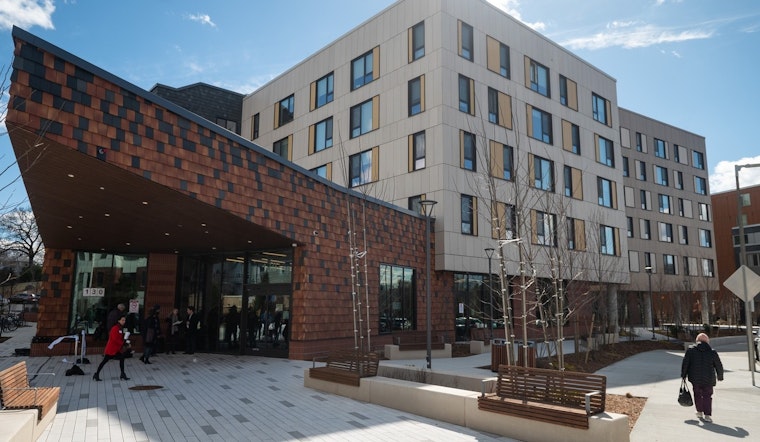
Boston's housing landscape got a major boost as Mayor Michelle Wu, alongside a cadre of lawmakers, marked the grand opening of the J.J Carroll House. The development, located in Brighton, is a result of a partnership between 2Life Communities and the Boston Housing Authority aimed at replacing outdated public housing units with 142 modern, affordable alternatives for senior citizens and disabled adults. Mayor Wu, in a celebration teeming with key political figures, hailed the project for its central mission to let seniors and disabled residents "live and thrive" in their own city, as reported by the City of Boston.
The redevelopment exercise has birthed 114 units that are deeply affordable thanks to the Section 8 voucher program, alongside 27 Low-Income Housing Tax Credit units, and even includes a unit for an on-site manager. Massachusetts bigwigs like Senator Elizabeth Warren and Congresswoman Ayanna Pressley dropped in to signal support, with Warren affirming her aim to keep fighting for federal funding to scale up such housing solutions. Pressley, reflecting on the project's impact, told City of Boston, “Families need the peace of mind that their loved ones are being taken care of in a safe and nurturing environment.”
Bringing to bear the power of public-private teamwork, the J.J Carroll House now stands as a model for senior living. It not only caters to affordability but also integrates healthcare and surpasses sustainability standards. The project commenced in 2019 with BHA selecting 2Life to revamp the former J.J Carroll Apartments. BHA Administrator Kenzie Bok emphasized how the project serves as a beacon for what they aim to achieve across Boston: “to provide more housing to anchor residents in our neighborhoods and allow them to age in place,” as detailed in statements to the City of Boston.
With sustainability at its core, J.J. Carroll is poised to become the first certified Passive House project for 2Life and will claim the title of one of the largest multifamily Passive House structures in Massachusetts. It integrates advanced technology such as solar energy and high-performing ventilation systems to effectively maintain temperature control. Additionally, the facility offers community amenities ranging from fitness centers to spaces for art and gathering. The project, estimated to cost $88.3 million, received funding from various federal, state, city, and private entities. Resident Beverly Gilbert expressed her enthusiasm about the facility, stating, “I am ready to live,” and credited her new home with rejuvenating her community spirit, as announced by the City of Boston.
Underscoring the collective effort, HUD New England Administrator Juana B. Matias acknowledged the project as "a shining example" of public and private sectors' ability to unite in preserving and enhancing public housing. With officials celebrating the synergy that made J.J Carroll House possible, the hope is that this blueprint of collaboration will be replicated to confront housing challenges across the state and beyond.