

























































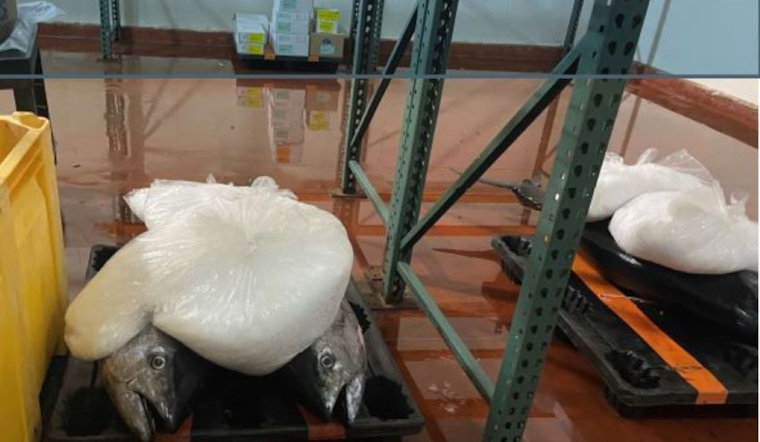
In an intricate takedown of illegal fishing operations, California's wildlife authorities have served justice to a poaching ring responsible for over 5,500 pounds of unlawful fish sales. The bust, led by the California Department of Fish and Wildlife (CDFW), revealed a staggering sum of more than $26,000 gleaned from the sale of recreationally caught fish— a blatant defiance of commercial fishing regulations. The investigation entangled several San Diego residents in a web of illicit activities, culminating in various pleas and hefty fines.
Principally in the crosshairs were David Haworth, 60, of San Diego, and Nicholas Haworth, 28, of La Jolla, who spearheaded the operation by buying and selling fish without the proper commercial documentation and licenses. Nicholas Haworth has admitted guilt to two counts of the unlawful sale of recreationally caught fish, resulting in a $10,000 fine and community service, as detailed in a CDFW news release. In an act of judicial leniency, David Haworth accepted a court-ordered diversion and consented to hosting six events to feed the homeless fish meals through a local food bank.
Fellow poachers caught in the sting include Lucas Dirkse, 29, Mitchell Bradford, 36, Brandon Demelo, 24, all hailing from San Diego, and the Whitmarsh brothers— Tanner, 30, and Trevor, 25, from El Cajon. Each faced the music for their role in the illegal operation, ranging from agreeing to community service and fines of $5,000 to being slapped with civil charges for unfair business practices and fines of $60,000 each. David Brown, 68, of San Diego, remains at large with an active warrant following his no-show at arraignment, spotlighting the ongoing challenge to enforce conservation laws.
San Diego City Attorney Mara W. Elliott, in a sentiment echoed by the CDFW, underscored the importance of clamping down on environmental transgressions. "California’s strict environmental laws exist for one reason: to protect nature and to ensure its existence for generations to come. Our ability to enjoy the outdoors depends on vigorous enforcement and prosecution of the laws that preserve our surroundings," Elliott stated, asserting the critical balance between enjoyment and preservation of the city's natural resources. Separate management of recreational and commercial fishing sectors by California's fisheries biologists and federal partners maintains the sustainability of marine species, ensuring fish stocks are not depleted by unregulated catches.
The CDFW's investigation, which spanned over six months, highlights the diligent efforts of wildlife officers to monitor and protect the integrity of marine ecosystems and the commercial fishing industry it supports. These robust enforcement measures not merely serve as a deterrent to would-be violators but also champion the interests of law-abiding commercial fishers, whose livelihoods depend upon the health and viability of oceanic life.




-4.webp?w=160&h=400&fit=crop&crop=edges)

