

























































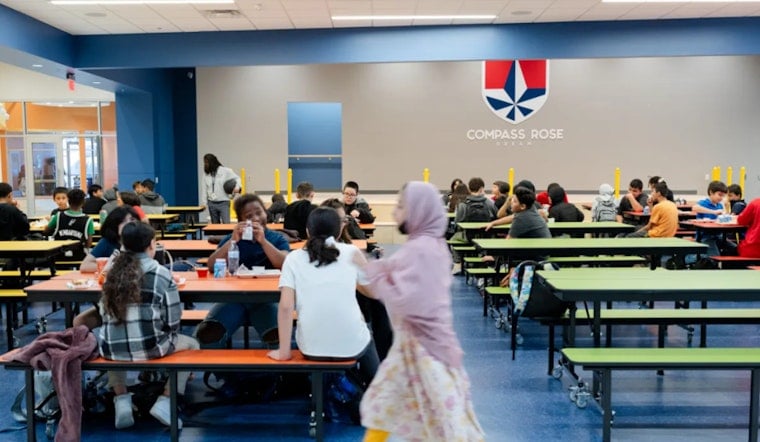
As the holy month of Ramadan approaches, public schools across the United States are making efforts to recognize and accommodate the needs of Muslim students. According to The Conversation, of the 3.85 million Muslims in the United States, about 1.35 million are children, many of whom attend public schools. This demographic forms part of the 60% majority of public school students who consider religion a significant aspect of their lives.
Public schools are guided by federal law, particularly Title VI of the Civil Rights Act of 1964, to protect students from discrimination, which includes, students of any religion. In 2023, the U.S. Department of Education reissued guidance to help schools provide federally protected accommodations for religious practices, such as prayer and expression. "These guidelines help schools prepare adequate accommodations for Muslim students year-round," The Conversation reports, emphasizing that Muslim students have the right to pray during non-instructional times if it does not disrupt others.
Recognizing Ramadan can have significant benefits for Muslim students. Research indicated by The Conversation suggests that acknowledgment of different cultures and faiths contributes to a stronger sense of belonging, better well-being, and improved academic performance. Conversely, experiences of discrimination can negatively impact students' academic success.
During Ramadan, which requires abstention from food and drink from dawn until sunset, schools offer various accommodations for fasting students. The Conversation notes schools may provide alternative seating arrangements such as libraries or classrooms for those who wish to avoid the cafeteria. "Muslim students who fast may request to sit away from the school cafeteria to avoid the sights and smells of food," the publication mentioned, which helps to minimize discomfort during the fasting period.
Yet, the month of Ramadan is not without its challenges for students. The early mornings and late evenings of fasting and prayer can affect students' energy levels and concentration throughout the school day. Some students may experience fatigue or headaches, leading them to seek accommodations for test-taking and homework. Schools have been adjusting expectations and providing support for after-school activities, crucial during the fasting period.
The increased recognition of Ramadan within schools has not only been seen at the K-12 level but also on college campuses. For years, Muslim Student Associations have been organizing annual Fast-A-Thons, events where they encourage other students to participate in fasting, often in solidarity and to raise funds for food-based charities.
Moreover, public school districts are increasingly observing Eid al-Fitr, the festival marking the end of Ramadan. In 2023, according to The Conversation obtained by the San Antonio Report, at least 19 districts closed for the holiday, and this year Eid ul-Fitr is expected to fall on Wednesday, April 10. Such recognition reflects the changing cultural landscape within education systems, aiming to be more inclusive of diverse religious practices.



