

























































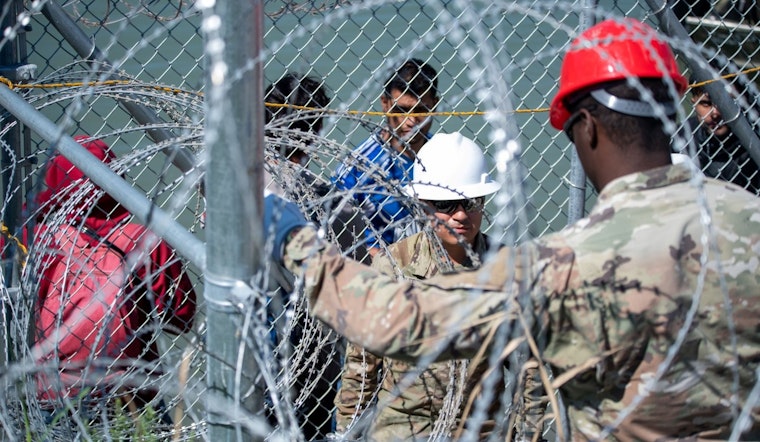
The future of Texas Senate Bill 4 (SB4) hangs in the balance as the U.S. Supreme Court is poised to deliver a decision on the contentious immigration law potentially today, with the temporary hold over its implementation set to expire at 4 p.m. this afternoon. The high court's verdict will determine if SB4, which grants local law enforcement the power to arrest suspected illegal border crossers and allows judges to send convicted migrants back to Mexico, aligns with the constitution.
Last month, amidst growing concerns about the bill's implications on immigration, a federal judge in Austin intervened to pause SB4. Since then, the Supreme Court extended the pause. Now, the nation awaits a ruling on the law Governor Greg Abbott signed into effect last December, according to a report by KENS 5. Critics argue the law is unconstitutional. U.S. District Judge David Ezra stipulated that arresting and deporting asylum-seekers could breach constitutional rights.
The upcoming law hasn't led to immediate changes in how Texas law enforcement operates. Webb County Sheriff Martin Cuellar told CBS News, obtained by KHOU 11, that they haven't started any new task forces, acquired vehicles, or conducted training in response to SB4. He simply stated, "Just the new law." This lack of preparation suggests uncertainty or maybe an acknowledgment of the complexities involved in enforcing immigration laws locally.
As the clock ticks down to the Supreme Court's decision, the legal battles against SB4 continue with several federal lawsuits challenging the bill's constitutionality, It's these lawsuits that kept SB4 from going into effect at the start of March stakes are high for both proponents and adversaries of the bill who are closely watching the Supreme Court's next move. Whatever the outcome, its implications will ripple across the Lone Star State and potentially set precedents for the nation's immigration policy discourse.





