

























































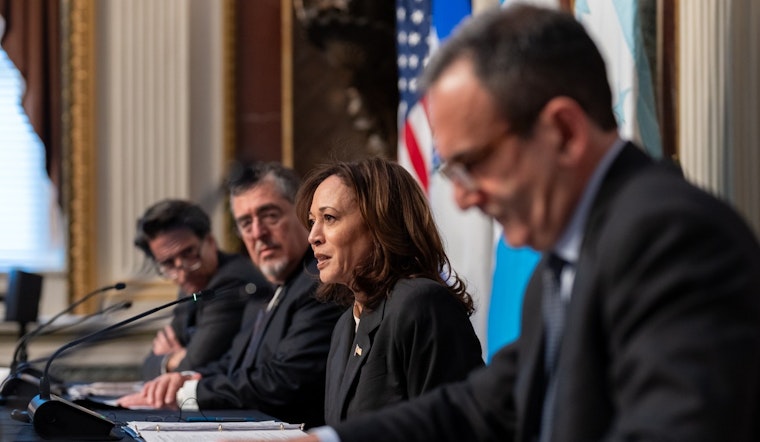
Vice President Kamala Harris rolled up her sleeves in a high-stakes effort to deepen the fight against the root causes of migration by beefing up investment in Central America. At a White House gathering on Friday, Harris announced that private investors have pledged over $5.2 billion to bolster economies in El Salvador, Guatemala, and Honduras, as part of the Central America Forward (CAF) initiative. The announcement, which featured a $1 billion influx of new commitments, was spotlighted in a recent report on the White House's website.
According to the vice president’s statement, the investments aimed at the Northern Triangle countries could be a game changer. Since the initial call to action in 2021, benefits are being felt on the ground with "more than 70,000 jobs", skills training for upwards of "1 million people," while also nudging more than "2.5 million people into the formal financial economy" and connecting some "4.5 million people to the internet". However, the overarching goal remains rooted in curbing the irregular migration by fostering an environment where potential migrants have the means to thrive at home.
The roundtable, comprising of government officials, business leaders, and civil society representatives, shone a spotlight on the progress of CAF while charting out the future trajectory of the partnership. Harris emphasized the ongoing need to bolster good governance, nurture economic opportunities, curtail violence, empower women, and secure labor rights across Central America. In emphasizing the importance of these initiatives, Harris said that while the development efforts are a long-term play, "we are making progress and giving people hope and economic opportunity".
As an unprecedented feather in CAF's cap, the meeting was graced by President Bernardo Arévalo of Guatemala, making it the first such roundtable where a foreign head of state was in attendance. Vice President Harris extended her gratitude to all partners involved in the regional upliftment endeavor, advocating for an unyielding pursuit of enabling citizens to lay down economic roots within their homelands, rather than seeking pastures new due to necessity.





