

























































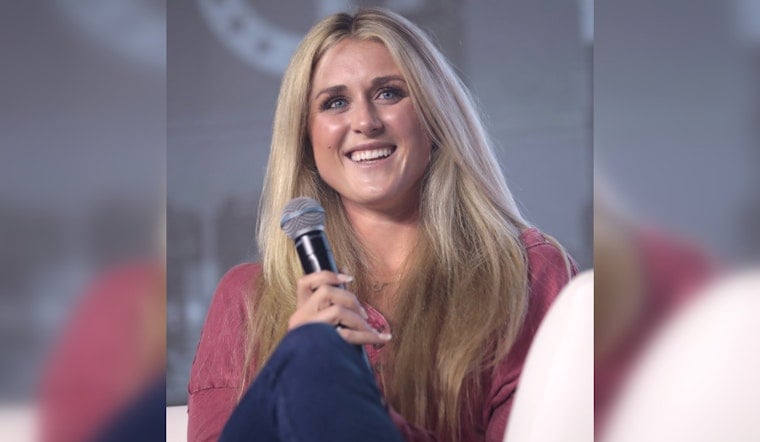
In a legal challenge that’s stirring the waters of college sports, former University of Kentucky swimmer Riley Gaines led a group of athletes in suing the NCAA over its transgender athlete policies. According to WABE, the lawsuit was filed on Thursday in U.S. District Court in Atlanta and accuses the collegiate sports governing body of violating Title IX rights.
Gaines and other plaintiffs, including Tylor Mathieu from Florida and several volleyball and track athletes, expressed distress over the NCAA's decision to let transgender swimmer Lia Thomas compete in the women's categories. The suit is rooted in events from the 2022 national championships in Atlanta, where competitors were taken aback upon learning they'd have to share a locker room with Thomas, and Gaines tied for fifth with Thomas in a 200-yard final but Thomas, was presented with the fifth-place trophy, not her.
Amid this heated dispute, the NCAA has remained firm on its stance, “While the NCAA does not comment on pending litigation, the Association and its members will continue to promote Title IX, make unprecedented investments in women’s sports, and ensure fair competition in all NCAA championships,” the NCAA said in a statement obtained by WABE. Transgender athletes like Thomas, who swam for the men's team at Penn before her transition, have become the epicenter of a broader national debate about fairness and inclusion in sports.
The lawsuit not only challenges the NCAA but also ropes in the University of Georgia system because Georgia Tech was the host of the contentious 2022 championships. Plaintiffs seek to prevent the NCAA from enforcing its transgender eligibility policies in Georgia-based events, policies, that critics say give transgender athletes an edge over cisgender women, although hard evidence in the field of elite athletics remains scarce. The NCAA, for its part, appears to be steering its policies to align with those of national sports governing bodies and the U.S. Olympic and Paralympic Committee.
Looking ahead, the outcome of this lawsuit could have significant implications for future NCAA eligibility policies specifically for the 2024-25 school year when the third phase of the revised policy is anticipated to roll out. It's a complex issue, teetering between gender rights and fair play, and now, the courts will have their say. Representatives from the Georgia schools named in the suit have not issued comments pending the receipt of the lawsuit.




_(cropped).jpg)