

























































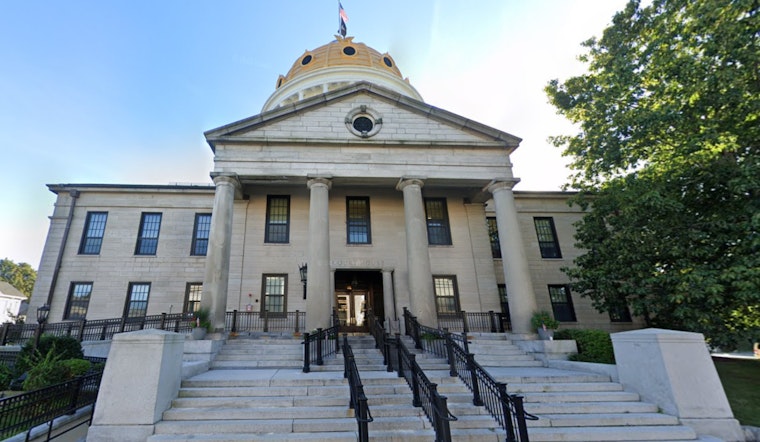
In a move to stifle courthouse chaos, a Massachusetts court is laying down the law on protests for the upcoming Commonwealth v. Karen Read trial. Slated to start tomorrow with jury selection, demonstrators have been given a clear message: keep your distance and ditch the gear. A court order issued forbids anyone from waving their placards or flaunting any visuals related to the case within a no-go zone of 200 feet of the Norfolk Superior courthouse.
The order, released to the public in the wee hours, comes down hard on courthouse demonstrations. "It is, hereby, ordered that no individual may demonstrate in any manner, including carrying signs or placards, within 200 feet of the courthouse complex during trial of this case, unless otherwise ordered by this Court," the mandatory buffer zone dictates according to the court's statement. The courthouse and its adjacent parking spot, normally bustling with action, will likely see a quieter spell as court proceedings unfold.
All eyes are on the high-profile case, but the order ensures that symbols of protest won't be. Those planning to attend the trial must leave all badges of expression at the door. "No individuals will be permitted to wear or exhibit any buttons, photographs, clothing, or insignia, relating to the case pending against the defendant or relating to any trial participant," the court's order stated. Even the police, who are often adorned with emblems of authority, have been directed to leave their uniforms home when attending the trial as a spectator or witness.
The court has made no qualms about amplifying its voice over those of protestors'. Beyond visual demonstrations, the use of bullhorns or mega(phone) decibels is also a no-go on these grounds. The rules are ironclad, with law enforcement officers who are testifying or are members of the audience wrapped into the prohibition from wearing "their department issued uniforms or any police emblems in the courthouse," according to the court's order. It's a hands-off-the-badge approach designed to scrub the courtroom of any influence that could sway a jury's gaze.
As the courthouse girds itself for the trial, the quieting of public displays becomes part of the story—a judicial attempt to preserve the sanctity of court proceedings, ensuring a fair and focused jury undistracted by the noise and imagery of the moment. The silence enforced outside the courthouse walls will speak volumes about the gravity within as justice awaits its due course.




