

























































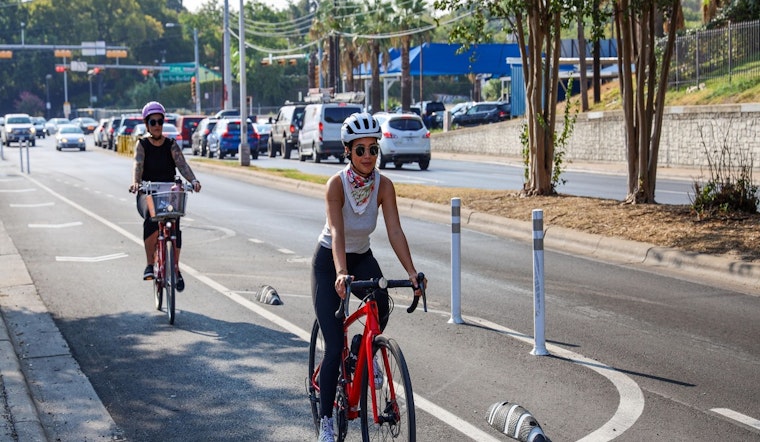
City planners in Austin are starting to see the fruits of their labor on Barton Springs Road where a safety pilot program is making the streets safer for everyone. According to a recent report by the City of Austin, early results show a significant drop in dangerous speeding and a public thumbs-up for the new lane reconfiguration that has turned a dangerous drag into what feels like a safer drive.
Since the city decided to seriously take action in August 2023, the stretch of road between Azie Morton Road and South Lamar Boulevard has been dialed back to just one vehicle lane each way, with special additions to aid cyclists and pedestrians. These measures were prompted by the persistent high-speed hi-jinks played out on the tarmac, including an incident in April 2022 where a speeding driver clocked in at over 50 mph and injured 10 people. Now, the average number of drivers racing at over 40 mph has dropped by a whopping 65 percent, which translates to 474 fewer speedsters per day, potentially to save lives.
Some could've bet that cutting road capacity would've led to an uptick in travel times, but surprisingly, that hasn't quite been the case. Queue lengths at traffic lights have grown due to the reduced number of lanes, but thanks to some nifty signal tweaking, most vehicle jockeys are getting through on the same signal cycle as before the changes were made, inflicting minimal delays on daily commutes.
Public opinion seems to have shifted into the safety project's lane too, with over 70 percent of more than 1,600 respondents showing support, as indicated by a February 2024 survey. As the weather warms up and the area gets busier with visitors au naturel and the odd car, the multi-modal scene picks up pace, causing a slight strain on travel times during peak hours. However, the city isn't just kicking back and watching the road rollout; they're committed to continuing to monitor, adjust, and review data well into the sunny season.
A final steer on the project is expected in late summer or early fall when Austinites will get the lowdown on whether these changes are here for the long haul. In the meantime, anyone interested can deep dive into the 6-month report and sift through a treasure trove of survey comments and feedback on the project's dedicated web page.





