

























































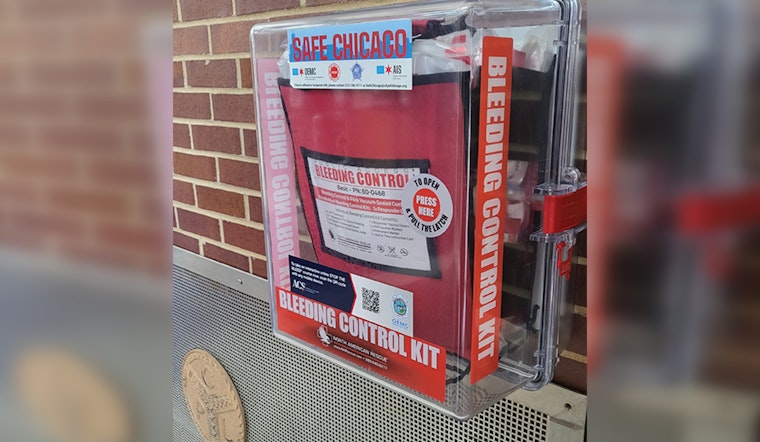
Chicagoans caught in the midst of a bleeding emergency might find hope in the form of a Stop the Bleed kit, a tool the city has become increasingly peppered with. In a lifesaving push that arms the public against the specter of severe bleeding, the Office of Emergency Management and Communication (OEMC) has announced that it has installed over a thousand of these kits across the city as part of the Safe Chicago program. CBS Chicago reported that approximately 1,004 kits have been placed in 600 locations since 2021, aimed at providing quick response aids during events like car crashes, shootings, or other forms of trauma.
As part of an encompassing public safety strategy, the kits, featuring tourniquets, gauze, and gloves, are stationed within reach at high-foot-traffic sites like the Navy Pier and City Hall, among others. The timing is critical, coinciding with the upcoming summer season, when both residents and visitors flock to the city's attractions. According to OEMC, this expansion of the bleeding control kit program includes notable sites such as tourist-packed Riverwalks, water taxis, and the Chicago Architecture Center, as detailed in CBS Chicago's report.
The initiative doesn't just stop at placement; it also encompasses education. The American College of Surgeons (ACS) STOP THE BLEED® program has been brought into the fold to ensure that not only are these kits accessible, but residents and city workers can also be proficient in using them. “Our partnership with the American College of Surgeons and the STOP THE BLEED® program will increase the readiness capabilities of our great city and foster a sense of safety and emergency preparedness throughout the city,” Rich Guidice, OEMC Executive Director, stated in a bulletin released by the ACS.
Emphasizing the importance of individual preparedness, the kits—and the knowledge on how to use them—are being made widely available. Each kit comes with instructional resources, including a manual and a QR code linking to an interactive online course. "Everyone should learn how to STOP THE BLEED®. By incorporating STOP THE BLEED® into their Safe Chicago program, the City of Chicago is setting an example for all cities in how to be prepared for an emergency and reduce the number of preventable deaths among its citizens and visitors,” Dr. Kenji Inaba of the ACS Committee on Trauma encouraged in the ACS bulletin. Public training augments the effort, ensuring that the presence of these kits isn't just symbolic, but a practical step towards bolstering community safety.
The intent is clear: in a city that grapples with its share of emergency incidents, from the unfortunate daily accidents to the more harrowing instances of violence, a wider net is being cast to equip civilians with the tools to act before professional help can arrive. With the STOP THE BLEED® initiative, the OEMC is not only fostering resilience among Chicagoans but also exemplifying a proactive public health strategy that could serve as a blueprint for cities nationwide.


