

























































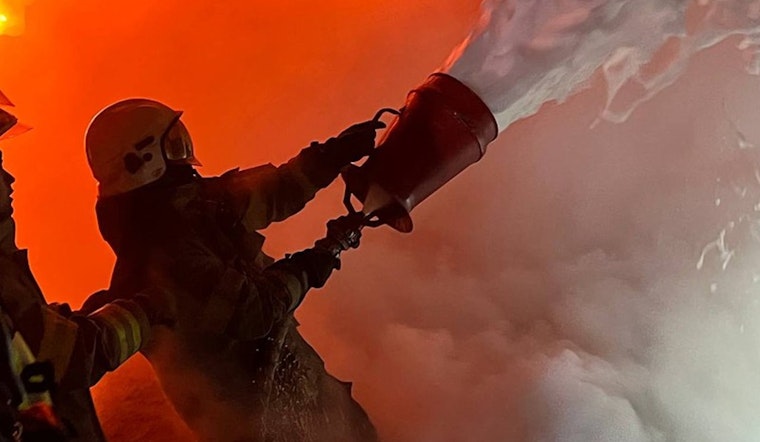
New research from the University of Arizona and the University of Michigan is signaling a serious health alert for the nation's bravest—firefighters may have to also battle increased cancer risks due to on-the-job chemical exposures. According to the University of Arizona, per- and polyfluoroalkyl substances (PFAS), found in firefighting foam and certain household items, have been linked to genetic alterations that could up the ante for prostate cancer development among those frequently confronting flames.
The study hones in on PFAS as a major culprit, with researchers noting that these chemicals can seep into firefighters' systems to a greater extent than the general public. Whereas most people might encounter PFAS through takeout containers or water-resistant clothing, for firefighters, the exposure is compounded through foams used to quell oil and gasoline fires, as well as through their protective gear. Professor Jeff Burgess, who led the research effort, warned that firefighters are acquiring increased levels of PFAS, a potentially dangerous situation when considering these substances' capacity to alter their genes. "We all have some level PFAS in our body, but on top of it firefighters have additional sources of exposure," Burgess said, as stated by ABC15.
Firefighters are diagnosed with prostate cancer 1.21 times more than the average man, and the research suggests a direct link to the genetically disruptive nature of PFAS. This disparity is a grim reminder of the hidden perils within an already dangerous profession. The study pointed to PFAS exposure as significantly different between new and seasoned firefighters, with various epigenetic modifications potentially setting the stage early for cancer risk.
The research findings, published in the journal Environmental and Molecular Mutagenesis, underscore the insidious dangers firefighters face beyond the obvious terrors of their trade. "With these published findings, we have clear evidence of the health risks that firefighters face due to cumulative exposure on the job," Burgess stated, as per the University of Arizona. The study is part of an ongoing effort to scrutinize and hopefully mitigate the occupational hazards that these public servants contend with daily.





.jpg)