

























































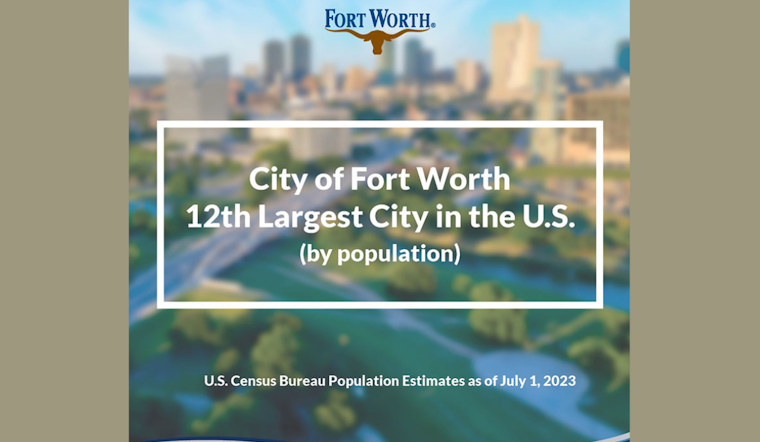
Fort Worth, Texas has officially carved out its place as the 12th largest city in the United States, boasting a population of 978,468, according to the latest figures released by the U.S. Census Bureau. The city has outpaced San Jose, California, and is now nipping at the heels of its Texan neighbor, Austin, standing fewer than 2,000 residents shy of the 11th spot, as per the City of Fort Worth.
In the past year, Fort Worth has welcomed a whopping 21,365 new residents, translating to a daily average of nearly 59 new people. This remarkable growth has positioned the city as the fastest-growing metropolis among those with a population over 50,000, an impressive feat that was highlighted in the U.S. Census Bureau's Vintage 2023 Population Estimates. Despite their unprecedented expansion, local officials are working diligently to ensure the city’s infrastructure and quality of life keep pace with its growth.
"This surge underscores the tremendous opportunities and potential that Fort Worth offers, and we are dedicated to harnessing this momentum to build a brighter future for generations to come," Mayor Mattie Parker stated, according to the City of Fort Worth. In an era of rapid urban expansion, Parker's administration is focused on maintaining a balance between progress and maintaining Fort Worth's reputation as a vibrant, safe, and prosperous city for all its dwellers. "While we celebrate our city’s growth, we remain committed to ensuring that Fort Worth remains a vibrant, safe, clean and prosperous community for all its residents," Parker said, indicating a vision for sustainable development, per the City of Fort Worth.
Despite this upheaval in urban rankings, the 15 largest cities in America remained consistent with the previous year, barring a few changes in their pecking order. Notably, Jacksonville jumped ahead of Austin, reflecting continual demographic shifts across the nation's major urban centers. New York City continued to dominate as the most populous, with nearly 8.3 million people, with Los Angeles following distantly at nearly 4 million.
While Fort Worth and other cities experience demographic shifts, urban planners and government officials must grapple with the realities that come with such rapid expansion. From housing to transportation, the growth of these metropolises will likely shape policy and infrastructure decisions for years to come.





