

























































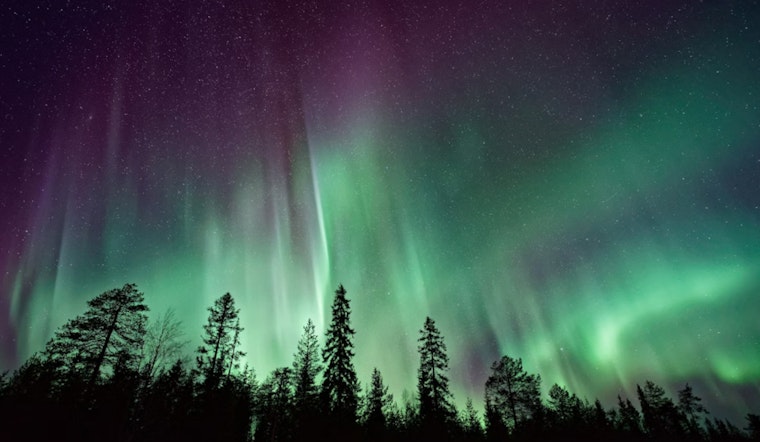
Last Friday night bore an unusual spectacle for millions of Americans as they witnessed the normally elusive aurora borealis stretching far into the south. The Northern Lights, typically a crown reserved for the skies over distant lands like Alaska or Canada, was on full display from as far south as Florida to Southern California due to a powerful geomagnetic storm.
Residents of East Tennessee, among others across the south, were awestrucking when hues of pink and green danced in the night sky, the local skies illuminated by the solar show. As reported by WVLT, the phenomenon turned social media into a mosaic of stellar photography shortly after 10 p.m. It was noted that the lights were better appreciated in more remote locations.
While the sight of the aurora in such southern climes is a rarity, the explanation is rooted in the turbulent nature of the sun. The National Weather Service and NASA had indicated that a "very rare" geomagnetic storm might extend the reach of the Northern Lights, WATE informed. Such solar disturbances are often out of sight and out of mind, until the energy released reaches our planet and causes the atmosphere to glow in ethereal light.
The spectacular event was dubbed as "potentially historic" by some, given the infrequency with which the Southern United States gets to bask in the auroral glow. The National Oceanic and Atmospheric Administration had observed at least seven coronal mass ejections from the sun, which prompted the forecast of what they described could be a "severe" geomagnetic storm through Sunday, WBIR detailed. Such cosmic belches, so to speak , bring more than just charged particles; they bring a connection, however fleeting, to the vastness of space that often feels so alien and distant.



